Aggressive vs Passive Play
Aggressive vs passive play in poker: why betting and raising beats calling, how the two fold-equity ways to win a pot work, and when passive lines are still right.
On this page · 5 sections
Aggressive vs passive describes how you play the hands you choose to enter — not how many you play. An aggressive player leads the action with bets and raises; a passive player follows it with checks and calls. This axis is separate from tight vs loose, and understanding why aggression wins is one of the biggest conceptual leaps a poker player makes. The short version: aggression gives you an extra way to win the pot, and that edge compounds over thousands of hands.
The two ways to win a pot
There are exactly two ways to win a pot in poker. First, you can have the best hand when the cards are turned over at showdown. Second, everyone else can fold before showdown. A passive player who only ever checks and calls has access to just the first path — they must actually hold the winning hand. An aggressive player who bets and raises unlocks both paths at once: opponents may fold to the pressure, and if they call, the aggressor can still win at showdown.
That second path has a name: fold equity. It is the value you gain from the chance your opponent folds a hand that would have beaten you, or a hand that could have improved to beat you. Every time you bet instead of check, you are buying fold equity. Passive players simply leave that value on the table, hand after hand.
Why aggression compounds
Betting does more than win uncontested pots. When you bet for value with a strong hand, you build the pot so you get paid more when you win. When you bet as a bluff, you deny your opponent the chance to realize their equity — a flush draw that folds to your turn bet never gets to hit its flush. And crucially, because your opponents cannot tell your value bets from your bluffs, they are forced into losing calls and losing folds against you.
The continuation bet is the everyday expression of this. As the preflop raiser you took the initiative before the flop; firing a continuation bet on the flop keeps the pressure on and wins a large share of pots outright. A passive player who checks that same flop surrenders the initiative and invites their opponent to take over.
A worked example
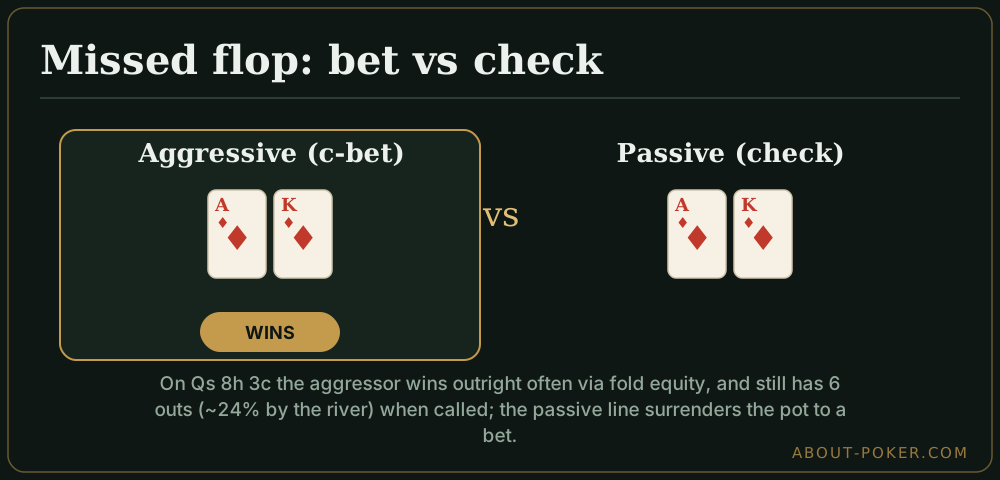
You raise preflop with Ad Kd and one player calls. The flop comes Qs 8h 3c — you missed, holding only ace-high. Consider the two styles.
The passive player checks. Now their opponent bets, and they are stuck: they have to fold the best drawing hand at the table, or call with nothing. Either way they have surrendered control and put themselves to a guess.
The aggressive player bets around half the pot. This continuation bet wins immediately a large fraction of the time, because the caller often has hands like a small pair or a missed draw that cannot continue. And even when called, the aggressor still has two overcards (six outs to make top pair) plus the option to fire again on a good turn card. Same cards, same board — but the bet turns a hopeless spot into a profitable one. That is fold equity doing the work.
When passive play is correct
Aggression is the default, not a religion. There are clear spots where checking or calling is the higher-EV line:
- Bluff-catching. When you hold a medium-strength hand that beats bluffs but loses to value, calling can be better than raising, because raising folds out everything you beat and only gets called by hands that beat you.
- Pot control. With a decent-but-vulnerable hand out of position, checking keeps the pot small and avoids being blown off your equity.
- Trapping — sparingly. Occasionally slow-playing a monster against an aggressive opponent lets them bluff into you. This works only when they will actually keep firing; against a passive opponent, slow-playing just costs value.
- Realizing equity with draws in position. Sometimes calling with a draw and taking a free card is better than raising, especially when a raise gets you blown off the hand.
The trap is over-applying these. Most passive players are not making sophisticated bluff-catches; they are simply afraid to bet. If your instinct in a pot is to check and see what happens, that instinct is usually costing you money.
Building aggression the right way
The goal is not reckless aggression — it is selective aggression tied to a disciplined range. Play a tight set of hands, then play them hard. This tight-aggressive approach is why acting last matters so much: position lets you apply pressure with far more information, so your bets and raises are better informed and harder to counter.
A quick checklist to shift from passive to aggressive:
- Bet or raise instead of calling whenever you have a plan for the next street.
- Continuation bet most flops as the preflop raiser.
- Stop cold-calling big hands you should be raising for value.
- Reserve calling for genuine bluff-catchers and pot-control spots, not for fear.
- Attack weakness — when opponents check to you, a bet often takes it down.
For more ways to convert this mindset into results at the table, see our tips for winning at Texas Hold’em. Master the two ways to win a pot, and passive play will start to feel like leaving money on the felt — because that is exactly what it is.
Frequently asked
Why is aggressive play better in poker?
Aggression gives you two ways to win a pot instead of one: your opponent folds, or you have the best hand at showdown. A passive player who only calls can win solely by having the best hand. That extra way to win — fold equity — is why betting and raising beats calling over the long run.
What is a passive poker player?
A passive player prefers checking and calling over betting and raising. They rarely take the initiative, so they win pots only when they hold the best hand. This makes them predictable and easy to play against, because their calls cap their range and their rare raises are almost always strong.
Should beginners play aggressively?
Yes, within a tight range. The classic winning style for developing players is tight-aggressive: play few hands, but play them with bets and raises rather than calls. Aggression should come from a disciplined hand selection, not from bluffing wildly in every pot.