Freezeout vs Rebuy Tournaments
Freezeout vs rebuy tournaments explained: how each format works, when reloading is worth it, and how the rebuy period changes your early strategy.
On this page · 7 sections
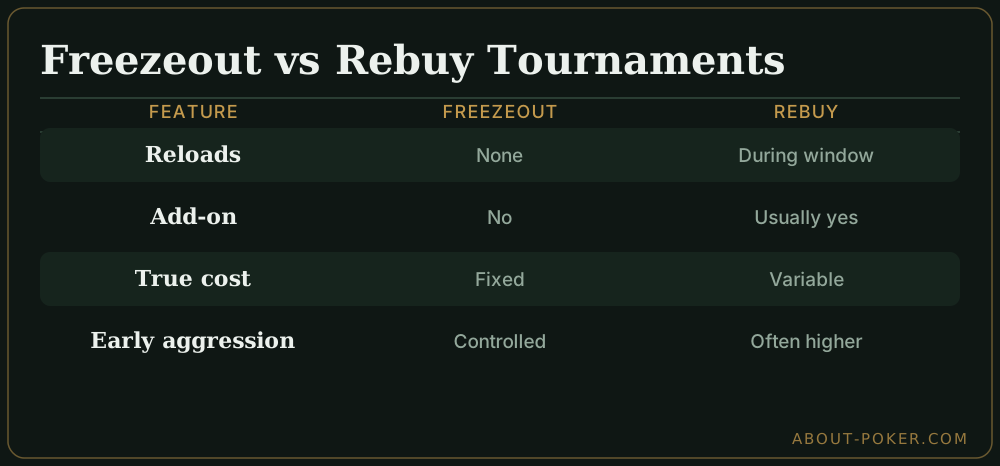
Freezeouts and rebuys differ in one rule: whether you can put more money in after you start. That single rule reshapes the prize pool, the early-game aggression, and how much you should budget before you sit down.
| Feature | Freezeout | Rebuy |
|---|---|---|
| Reloads allowed | None | Yes, during rebuy period |
| Add-on | No | Usually offered |
| True cost | Fixed | Variable |
| Early aggression | Controlled | Often higher |
| Bankroll planning | Simple | Needs a cap |
How each format works
In a freezeout, you pay one buy-in, receive your starting stack, and that is all you get. Bust and you are done. This is the format of most major events, including the WSOP Main Event, because it keeps every chip meaningful from the first hand.
In a rebuy, there is an opening window — commonly the first hour or two — during which you can buy more chips if you fall below a threshold or bust. Many rebuys also offer a single add-on at the end of that window, letting everyone top up regardless of stack. Once the rebuy period closes, the event plays exactly like a freezeout for the rest of the way.
Why the rebuy period changes strategy
During the rebuy window, busting is not fatal, so the immediate cost of gambling drops. Players who are comfortable reloading will take thinner all-in spots to build a big stack, because a coin flip that busts them just means another buy-in rather than elimination. This makes early rebuy tables looser and more aggressive than a freezeout’s early levels.
That does not mean you should spew. It means the correct threshold for getting chips in shifts slightly, and you should account for opponents doing the same. If you are new to reading these spots, the tournament strategy guide covers stack-based decisions in depth, and thinking in terms of chip value the way you would in a cash game helps during the rebuy phase specifically.
A worked example
You are in the rebuy period holding pocket nines, and an aggressive player who has already rebought twice shoves 30 big blinds over your open. In a freezeout, calling off with 99 against a tight range is marginal because busting ends your event. In a rebuy, the math is friendlier: if your read is that his shoving range is wide — say any pair, any ace, and broadways — 99 is close to a coin flip or better, and even if you lose you can reload. Against a range of overcards like AK, 99 is about 54% to 46% in your favor. The reload safety net tips a close call toward action, provided your bankroll can absorb the rebuy.
Bankroll and cost control
The trap in rebuys is the open-ended cost. A “$20 rebuy” can quietly become $100 if you reload four times. Before you sit, decide your maximum spend — for example, buy-in plus two rebuys plus the add-on — and stop there. Freezeouts remove this problem entirely: the cost on the ticket is the whole cost, which is why they are easier for disciplined bankroll planning.
Common mistakes
The most expensive rebuy leak is chasing losses: rebuying on tilt after a bad beat with no plan, buy-in after buy-in, until the session costs far more than it should. The second is the mirror error — playing the rebuy period as tightly as a freezeout and missing the cheap chances to build a stack while the field is gambling. In a freezeout, the common mistake is the opposite: taking a marginal flip early and busting when patience would have preserved a healthy stack for the deeper, higher-value stages.
When to pick each
Choose a freezeout when you want a fixed cost, a level playing field from hand one, and lower total variance. Choose a rebuy when the prize pool and field justify the extra spend, you have the bankroll to reload, and you can exploit opponents who gamble too loosely early. Almost always take the add-on — it is usually the best chip-per-dollar rate in the event. If you are still building your tournament fundamentals, start with freezeouts so your costs stay predictable while you learn.
Quick checklist
- Freezeout means one buy-in and out when busted; rebuy lets you reload during a set window.
- Rebuy periods run looser and more aggressive because busting is not fatal yet.
- Set a hard spending cap before a rebuy so the cost does not spiral.
- Take the add-on unless your stack is already dominant.
- After the rebuy window closes, play both formats the same way.
Frequently asked
What is a freezeout tournament?
A freezeout is a tournament where you buy in once and cannot reload. When your chips are gone, you are out. It is the purest tournament format because every chip is precious and there is no way to buy your way back after busting.
Is a rebuy or freezeout better value?
It depends on your bankroll and discipline. Rebuys can have a bigger prize pool and reward players who can profitably reload, but they cost more if you rebuy repeatedly. Freezeouts have a fixed, known cost, which makes bankroll planning simpler.
Should I always take the add-on in a rebuy?
Usually yes. The add-on is typically the cheapest chips per dollar in the whole event, and a bigger stack at the end of the rebuy period gives you more room to play. Skip it only if your stack is already very large relative to the field.