How to Steal Blinds
Stealing blinds is free money when you attack from late position. Learn which seats to steal from, how wide to open, and how to react when you get resistance.
On this page · 6 sections
Every orbit, the blinds go into the pot whether anyone wants them or not — and when it folds to you in late position, that money is sitting there waiting to be taken. Stealing blinds is one of the fastest ways to add profit to your game, because you’re winning pots without needing a hand and without much resistance. The players left to act either fold or commit to playing a whole hand out of position against you. Learn to attack the right seats with the right frequency and you’ll grind chips that opponents give away for free.
Why stealing works
A steal is a raise from late position when everyone folds to you, made with a wide range in the hope of winning the blinds uncontested. It works because of leverage: only two players remain, the small blind and the big blind, and both must act out of position for the rest of the hand. The tighter and more passive they are, the more often they simply fold and hand you the pot.
The math is generous. If blinds are 1/2 and you open to 5, you’re risking 5 to win the 3 already in the middle — plus any antes. You don’t need to win often for that to profit, because when the blinds fold, you collect immediately without ever seeing a flop. This is the flip side of big-blind defense: your steal profits exactly when they defend too little.
The best seats to steal from
Position is everything here. The later you are, the fewer players can wake up with a hand behind you, so the wider you can attack. See the full breakdown in the position guide.
- Button — the premier stealing seat. Only two players act after you, and you’ll have position for the entire hand. Open extremely wide.
- Cutoff — one player (the button) can still enter, so tighten slightly, but this is still a strong steal seat.
- Small blind — a special case. It folds only to the big blind, but you’ll be out of position post-flop, so choose hands that play well heads-up and consider raising a bit larger.
Never call this “stealing” from early position — with many players left to act, a raise there needs a genuinely strong hand, not a steal attempt.
How wide to open
From the button, a solid steal range is enormous: every pocket pair, every ace, nearly every suited hand, and a big chunk of offsuit broadways and connectors — often 45–55% of hands. From the cutoff, trim that to roughly 25–30% by cutting the weakest offsuit hands. From the small blind, open around 35–45% but bias toward suited and connected hands that flop well heads-up.
Sizing should be small and efficient. A raise to 2–2.5 big blinds risks little to win the blinds and any antes. There’s no need to over-invest when the goal is a cheap, frequent profit.
A worked example
Blinds 1/2, it folds to you on the button with J♦ 8♦. Everyone earlier has folded.
This is a standard steal. Raise to 5. Jack-eight suited isn’t strong in a vacuum, but from the button against only two players, it’s a clear open: it flops well, makes disguised straights and flushes, and you’ll have position all hand. Most of the time both blinds fold and you win the pot on the spot. When the big blind calls, you still have a playable hand with position — a great combination.
Now move the same hand to under the gun at a full table and it becomes a fold. Too many players can wake up with a better hand, and the leverage that made the steal work is gone.
Reacting to resistance
Stealing wide means you’ll sometimes get pushback, and how you respond separates winners from spew.
- Facing a 3-bet: Fold your weakest steals — they were opened to win uncontested, not to play a big pot. Continue with hands that flop well or are strong enough to 4-bet. Don’t call 3-bets out of position with junk just because you opened.
- Facing a call: Now it’s a normal heads-up pot in position. Use your positional edge to c-bet good boards and pot-control weak ones.
- Against a habitual re-stealer: If a blind keeps 3-betting your opens, tighten your steal range so your opens are stronger, or start 4-betting to fight back.
The single biggest steal leak is opening too wide and then refusing to fold to resistance. A steal that gets raised has failed — let it go and steal again next orbit.
A stealing checklist
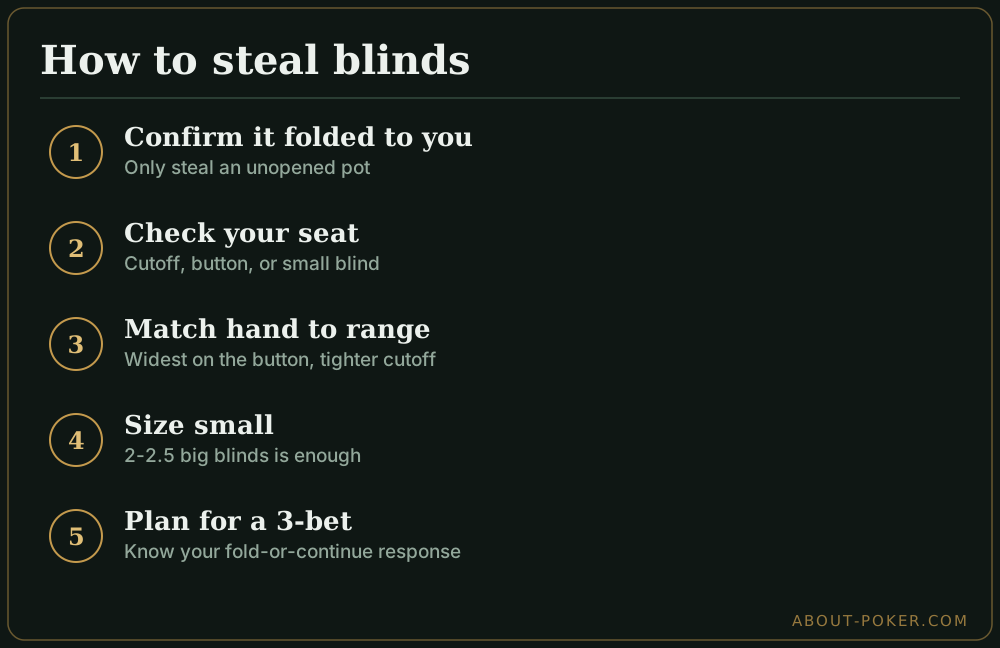
Before you fire a steal, confirm:
- Has it folded to me? Only steal when the pot is unopened.
- Am I in the cutoff, button, or small blind? These are the steal seats.
- Is my hand within range for this seat? Widest on the button, tighter in the cutoff.
- Is my sizing small? 2–2.5 big blinds is enough.
- What will I do if 3-bet? Have a fold-or-continue plan before you raise.
Do this consistently and you’ll pick up small pots all night. Those uncontested blinds and antes add up to a meaningful piece of your win rate — and they cost your opponents nothing more than the discipline they didn’t have.
Frequently asked
What is stealing the blinds?
Stealing means raising from late position when it folds to you, hoping to win the blinds and antes without a fight. You attack with a wide range because the players behind must either fold or play out of position against you.
What hands should I steal with?
From the button you can open very wide — any pair, any ace, most suited hands, and many offsuit broadways and connectors. From the cutoff tighten slightly, and from the small blind pick hands that play well heads-up.
How big should my steal raise be?
A raise of 2 to 2.5 big blinds is standard and efficient — it risks little to win the blinds and antes. Only size up when the blinds call too much and you want to punish them with a bigger pot when you have a real hand.