Turbo vs Regular Tournaments
Turbo vs regular poker tournaments compared: blind speed, stack depth, variance, and the strategy shift you need to beat fast structures.
On this page · 6 sections
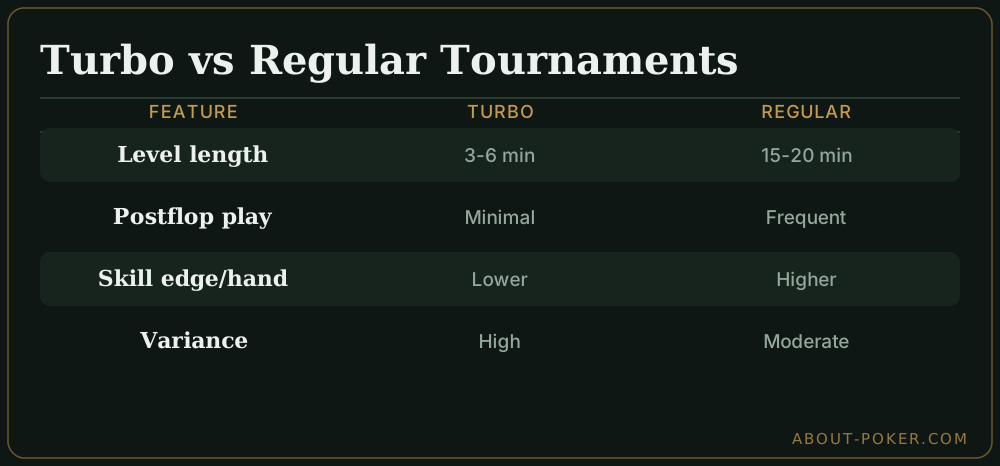
The gap between a turbo and a regular tournament comes down to one lever: how fast the blinds go up. Everything else that feels different — the variance, the shorter stacks, the constant all-in decisions — flows from that single setting.
| Feature | Turbo | Regular |
|---|---|---|
| Level length | 3–6 min online | 15–20 min |
| Starting stack (in BB) | Often shallower | Usually deeper |
| Postflop play | Minimal | Frequent |
| Skill edge per hand | Lower | Higher |
| Variance | High | Moderate |
How blind speed changes everything
Your stack is only meaningful measured in big blinds, not chips. In a regular event you might start with 100 big blinds and still have 40 big blinds an hour in. In a turbo, the blinds outrun your chips: even if you never lose a pot, folding through fast levels grinds you down to 20 big blinds quickly. Short stacks mean fewer streets, fewer decisions, and far less room for postflop skill.
That is the core trade-off. A regular structure rewards the deeper, more technical parts of the game — position, multi-street planning, and thin value. A turbo compresses the event into preflop and short-stack spots, where a simple, well-drilled strategy beats a fancy one.
The turbo strategy shift
Once you are 20 big blinds or shorter, min-raising and folding to a shove gets expensive, so open-shoving and reshoving become your main tools. The practical adjustments are:
- Open wider from late position. With 12–18 big blinds, the button and cutoff shove or open a much wider range because fold equity is high and blinds are worth stealing.
- Reshove aggressively. Against a late-position opener, jamming 15 big blinds with hands like A9, KJ, or small pairs pressures their wide range.
- Stop flatting out of position. Calling to see flops bleeds chips you cannot rebuild. Fold or jam.
- Accumulate early. Because the structure is short, chip up in the first few levels while stacks are still deep enough to play short-handed poker.
A worked example
You are on the button in a turbo with 14 big blinds. It folds to you and you hold A8 offsuit. The blinds are a big blind of 1,000 with your stack at 14,000. Shoving here is standard: your hand is well ahead of the random hands the blinds will wake up with, and even when called you often have live cards. If called by a hand like KQ, you are roughly a coin flip (A8o vs KQo is about 57% to 43% in favor of the ace-high). The fold equity plus the times you flip and win makes this a clear jam. In a regular structure with the same 14 big blinds you would play it identically — the difference is that in a turbo you reach this stack depth ten times faster, so drilling these spots matters more.
Common mistakes in turbos
The biggest leak is playing a turbo like a deep-stacked regular: limping, calling raises to “see a flop,” and min-raising with 15 big blinds. Every one of those spots leaks fold equity you cannot afford. The second leak is tightening up when you should be widening — short stacks force action, and folding your way to the money surrenders your last shot at a real stack. If you want the deeper framework behind these adjustments, see the tournament strategy guide.
Which should you play?
Play regular structures when you want to learn, build postflop skill, and lower variance. Play turbos when you are short on time, want a bigger sample of push-fold reps, or specifically want to exploit players who have not adjusted to fast blinds. Hyper turbos take this further with 2–3 minute levels and near-total push-fold play; they are the highest-variance format and only worth it if your short-stack game is sharp.
Quick checklist
- Measure your stack in big blinds every level, not in chips.
- Below 20 big blinds, switch to open-shove and reshove mode.
- Widen your ranges from late position as blinds pressure you.
- Chip up early while stacks are still deep enough for real poker.
- Do not flat out of position in a turbo — jam or fold.
Frequently asked
What is a turbo poker tournament?
A turbo is a tournament where the blind levels rise much faster than normal, usually every 3 to 6 minutes online instead of 15 to 20. Because the blinds climb quickly, your stack shrinks in big-blind terms fast, forcing shorter-stack decisions much earlier in the event.
Is a turbo or regular tournament better for beginners?
Regular structures are better for learning because you get deeper stacks and more postflop practice per buy-in. Turbos are cheaper per hour and rack up sample size fast, but they punish hesitation and reward simple push-fold discipline over nuanced play.
How fast are blinds in a hyper turbo?
Hyper turbos run levels of 2 to 3 minutes and often start with only 25 to 50 big blinds, so most of the event is played 15 big blinds or shorter. They are almost entirely a push-fold and reshove game with very high variance.