How to Study Poker
A practical, no-nonsense system for studying poker off the table: what to work on, how to use solvers and reviews, and how to turn study into real results.
On this page · 7 sections
Studying poker well is less about how many hours you log and more about how you spend them. Most players confuse activity with progress — they watch streams, half-read strategy threads, and call it study. Real study is active, targeted, and looped back into your actual play. This guide lays out a system: what to work on, in what order, and how to make sure the work shows up at the table.
Study the leaks you actually have
The single biggest mistake is studying whatever is most interesting rather than whatever is costing you the most money. A river overbluff you make once a session matters far less than a preflop range you get wrong every orbit.
So start with evidence, not vibes. Your own hand histories are the richest source you have. Pull the pots where you lost the most or felt least sure, and look for patterns — folding too much on the turn, calling 3-bets too wide out of position, missing thin value on the river. If you use tracking software, finding leaks in your poker database turns thousands of hands into a ranked list of what to fix first. Study that list, top down.
Build fundamentals before flourishes
Beginners and even many mid-stakes players skip the boring layer and jump to advanced concepts. Don’t. The fundamentals decide the most pots:
- Preflop ranges. Which hands to open, 3-bet, call, and fold, by position. This alone removes a large share of losing spots.
- Pot odds and equity. Knowing you need about 33% to call a pot-sized bet, and roughly how much equity your draw has.
- Hand reading. Narrowing an opponent’s range street by street from their actions.
Only once these are automatic does deep GTO theory, complex bluff construction, and exploitative adjustment pay off. A player with rock-solid fundamentals and no fancy tricks beats a player with fancy tricks and shaky fundamentals almost every time.
Use solvers and trainers correctly
A solver is a study tool, not an answer key to memorize. The goal is to extract principles — “the preflop raiser bets small and often on dry ace-high boards,” “the caller defends more against a half-pot bet” — not to memorize exact frequencies for spots that never repeat exactly. Set up a spot, form your own guess first, then check the solution and ask why it differs from your intuition. That “why” is the learning.
For raw pattern recall — ranges, board textures, quick-decision spots — drilling beats reading. A tool like a GTO trainer app forces active recall under a clock, which is exactly the muscle you use at the table. Fifteen focused minutes of drilling sticks better than an hour of passive video.
Make it stick with active recall
You can understand a concept and still blank on it mid-hand. The fix is active recall and spacing. Instead of re-reading a chart until it feels familiar (familiarity is a trap — recognizing a chart isn’t the same as recalling it under pressure), test yourself on it and repeat those tests at expanding intervals. This is why spaced repetition for poker study turns hours of vague chart-gazing into minutes of durable, table-ready memory. Turn each range and rule of thumb into a flashcard, review right before you’d forget, and watch recall become automatic within a few weeks.
A worked study block
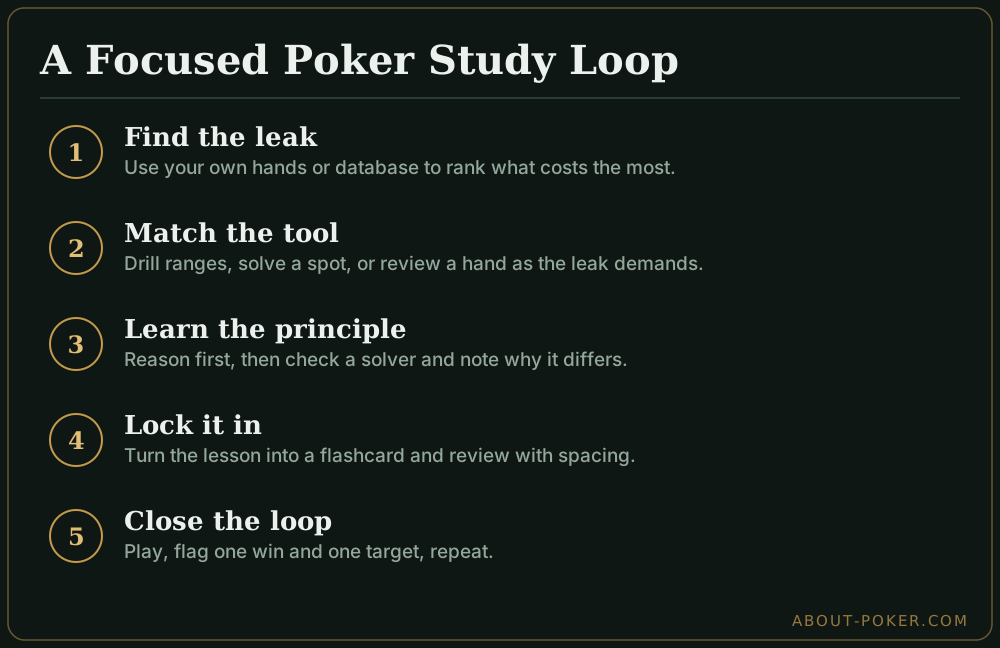
Here’s what one focused 60-minute block might look like, so “study” stops being abstract:
- 0–10 min — Range drill. Run a preflop trainer for your main position. Note any hand you got wrong.
- 10–35 min — Hand review. Take three of your recent tough hands. For each, write what your opponent’s range was on every street and where your line went right or wrong. Don’t just look up “the answer” — reason it out first.
- 35–50 min — Solver check. Load the trickiest of those three spots into a solver. Compare your reasoning to the solution and write one sentence on what surprised you.
- 50–60 min — Flashcards. Add the day’s lessons to your spaced-repetition deck and clear any cards due for review.
That’s a tight, active hour. Done a few times a week, it beats twenty passive hours.
Close the loop back to the table
Study only counts if it changes decisions. After each session, jot down one or two spots you handled better because of recent work, and one you still botched — that becomes tomorrow’s study target. This loop, play then study then play, is the entire engine of improvement.
Be patient with the timeline. Real, measurable gains show up over thousands of hands, not one session. Trust the process: fix evidence-based leaks, drill fundamentals to automaticity, extract principles from solvers, and lock them in with spaced recall. Do that consistently and your win rate follows.
A quick study checklist
- Study leaks found in your hands, not random topics.
- Nail preflop, pot odds, and hand reading before advanced theory.
- Use solvers to learn principles, not to memorize frequencies.
- Drill for recall; review with active testing, not re-reading.
- End every session by naming one win and one target.
Frequently asked
How many hours a week should I study poker?
There's no fixed number, but a common healthy ratio is one hour of study for every three to five hours of play. What matters far more than raw hours is that study is focused, active, and tied to leaks you've actually identified in your own game rather than random video-watching.
What should a beginner study first?
Start with preflop opening and 3-bet ranges for your format, then pot odds and basic hand reading. These fundamentals decide the most pots and are the cheapest mistakes to eliminate. Memorizing solid preflop ranges alone removes a huge share of losing spots.
Is watching poker videos good study?
Videos are useful for exposure to new ideas but weak as your main study method because they're passive. You'll learn far more by pausing to guess the play before it's revealed, and by testing yourself with drills and hand reviews afterward.
How do I know if my study is working?
Track a few things: your win rate over a large sample, whether specific leaks you targeted are shrinking, and whether spots that used to feel confusing now feel automatic. Study that isn't changing your in-game decisions isn't really working.