Best Poker Training Sites Compared (2026)
Poker training sites teach the game through courses, videos, quizzes, and AI drills. Here's what each type offers and how to pick one for your level.
On this page · 6 sections
Poker training sites teach the game through structured content — video courses, written lessons, interactive quizzes, and AI-driven practice. Unlike a solver, which only computes answers, a training site tells you what to study and in what order, which is exactly what most improving players need. It’s the most beginner-friendly study tool there is.
What training sites offer
Most platforms combine a few formats, and the mix matters more than any single feature.
| Format | What it’s good for | Best for |
|---|---|---|
| Video courses | Watching pros reason through hands | Visual learners, concept-building |
| Written articles | Reference and quick review | Skimmers, looking things up |
| Quizzes & drills | Active recall, finding leaks | Testing what you actually know |
| AI practice bots | Playing thousands of hands with feedback | Reps without risking money |
| Community/forums | Posting hands for feedback | Social learners, edge cases |
Quizzes and drills tend to be undervalued. Passively watching videos feels productive, but active recall — being forced to make the decision yourself before seeing the answer — is what actually moves a concept into your game.
The main poker training sites compared
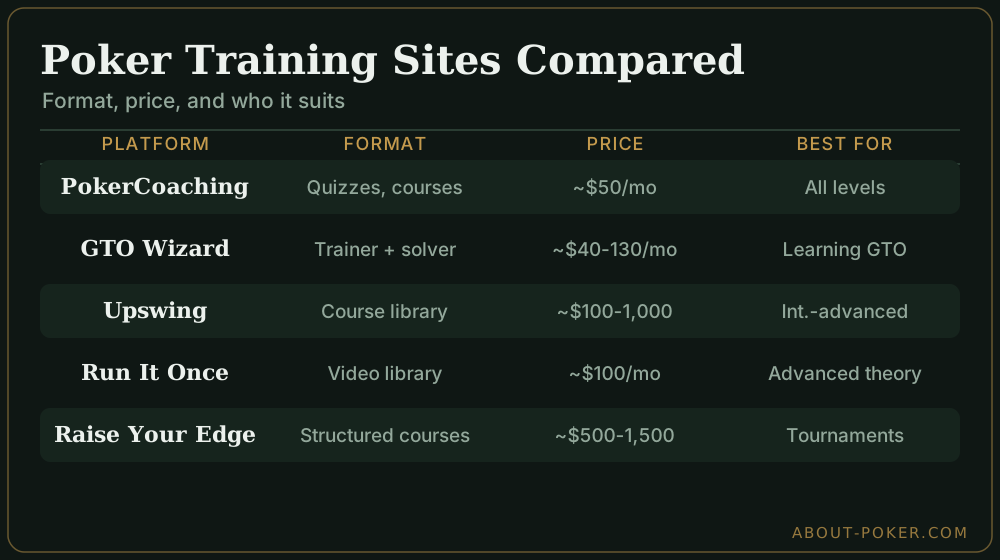
These are the platforms most players end up choosing between. Prices are approximate monthly figures as of 2026 (many are cheaper billed annually, and course-based sites often sell one-off courses instead of subscriptions):
| Platform | Format | Price tier | Best for |
|---|---|---|---|
| PokerCoaching | Quizzes, drills, courses, coaching | ~$50/mo (free tier available) | All levels, quiz-driven study |
| GTO Wizard | GTO trainer + solver solutions | ~$40–130/mo (free daily hands) | Learning GTO by drilling spots |
| Upswing Poker | Course library, ranges | Courses ~$100–$1,000 one-off; lab ~$100/mo | Intermediate to advanced cash & tournaments |
| Run It Once | Video library by pro coaches | ~$100/mo (Elite tier) | Advanced players wanting deep theory |
| Raise Your Edge | Structured tournament & cash courses | Courses ~$500–$1,500 one-off | Tournament players (Bencb’s courses) |
| Chip Leader Coaching | Tournament videos + community | ~$50/mo | MTT grinders |
A quick way to read the table: subscription sites (PokerCoaching, GTO Wizard, Run It Once) suit ongoing study, while one-off course sites (Upswing, Raise Your Edge) suit players who want a single deep dive on one format and are willing to pay a larger sum up front.
How to choose one for your level
Pick based on where you are, not on which site is most famous.
If you’re brand new, start outside paid platforms entirely. Nail the rules and how the game plays first. Then a beginner course on starting-hand selection and position will do more for your results than anything advanced.
If you’re a steady recreational player, look for a site with structured intermediate courses plus quizzes, so you’re tested rather than just lectured.
If you’re grinding to move up, you want depth — advanced video libraries, range work, and ideally content that connects to solver study so the theory and the drills reinforce each other.
Quick picks by level: for a first paid subscription, PokerCoaching is the safest all-rounder because its quiz engine forces active recall. Intermediate players who want to learn GTO get the most from GTO Wizard’s trainer. Advanced players chasing theory lean toward Run It Once or Upswing’s advanced courses, and tournament specialists gravitate to Raise Your Edge or Chip Leader Coaching.
A simple study plan
Here’s a sequence that works regardless of which platform you choose:
- Fundamentals first. Rules, hand rankings, and position before any strategy.
- One concept at a time. Master starting hands before postflop, postflop before bet-sizing theory.
- Drill, don’t just watch. After each lesson, take the quiz and play hands testing that idea.
- Review your own game. Use tracking software and its HUD to find the leaks worth studying next.
- Layer in theory. Once fundamentals are automatic, add solver work to refine close spots.
That review step in particular closes the loop: training sites teach concepts, but your own database tells you which concepts you’re actually getting wrong.
What about free options?
You can learn the entire foundation of winning poker without spending a cent. Free articles, intro videos, public quizzes, and community forums cover everything a beginner needs, and many paid sites offer a free tier to sample. Spend money only once you’ve outgrown the free material and know exactly what skill you’re paying to improve.
Best free resources to start with: GTO Wizard gives you a batch of free solved hands to drill each day, and PokerCoaching offers a free membership tier with sample quizzes. For reading and discussion, the r/poker subreddit and the TwoPlusTwo forums are free places to post hands for feedback, and YouTube channels from established coaches (many of the same pros who teach on the paid sites) cover fundamentals at no cost.
The bottom line
Training sites are the guided path into the game: they sequence your learning, test it with drills, and keep you from studying random spots in random order. Start with the fundamentals, lean on active recall over passive watching, and review your own hands to decide what to learn next. When you’re ready to go deeper, bring in a GTO solver and the rest of the poker tools & software toolkit.
Frequently asked
What are poker training sites?
They're platforms that teach poker through structured content — video courses, written lessons, interactive quizzes, and AI-driven practice. They tell you what to study and in what order, which makes them the most beginner-friendly study tool.
Are there free poker training sites?
Yes. Many platforms offer free articles, intro videos, or limited quiz access, and poker forums and communities are free. Free resources are plenty to learn the fundamentals before paying for anything.
How should a complete beginner start?
Learn the rules and hand rankings first, then a basic training course on starting-hand selection and position. Add quizzes to test yourself, and only move to advanced strategy or solvers once the fundamentals are automatic.
What's the difference between a training site and a solver?
A training site teaches you concepts in a guided sequence; a solver computes optimal strategy for a single spot with no teaching. Training sites are for learning, solvers are for deep analysis once you already understand the basics.