Studying With a Poker Database
Turn your poker tracker into a real study tool: how to filter hands, find leaks, build a weekly review routine, and avoid the biggest database mistakes.
On this page · 6 sections
A poker database is only as good as the questions you ask it. Most players install a tracker, glance at their win rate, and never touch the filters. That wastes the single most powerful study tool available to online players. Your database holds thousands of decisions you have already made, tagged with position, action, and result. Studying with a poker database means turning that archive into a targeted feedback loop that tells you exactly where you are losing money and whether your fixes are working.
If you are still setting up your tracker, start with poker tracker database explained for the mechanics of importing hands. This guide assumes you already have a sample and want to study it.
Start with the right question, not the whole database
Opening your full database and scrolling is not studying. It is browsing. Real database study begins with a hypothesis: “I think I fold too much to river bets” or “my cutoff opens might be too wide.” A hypothesis tells you which filter to apply.
The two filters that matter most are position and action line. Position sorts every decision by where you sat. Action line reconstructs the sequence: who raised, who called, who bet the flop. Together they isolate a repeatable spot. Instead of studying one random hand, you study the 400 times you faced a 3-bet from the button, then decide whether your aggregate response is sound.
A worked example: your fold-to-3-bet number
Suppose you filter to “opened from the cutoff, faced a 3-bet” and the tracker shows you folded 68% of the time over 300 samples. Is that a leak? A reasonable defense frequency against a 3-bet is roughly 40-55% depending on sizing and position, so folding 68% is high. You are opening hands you are unwilling to continue with.
Now dig one layer deeper. Filter for the hands you did continue with and check the results. If your 4-bet and call range is winning but small, the fix is not to defend more loose hands; it is to open tighter from the cutoff so the hands you do open can stand a 3-bet. That is the difference between a symptom (high fold percentage) and a cause (a too-wide opening range). A database lets you separate the two.
Build a weekly review routine
Consistency beats intensity. A 40-minute session every week compounds faster than a four-hour binge once a month, because you can measure whether last week’s adjustment changed this week’s numbers. A simple routine:
- Tag hands while you play. Most trackers let you flag a hand mid-session. Flag anything that felt uncomfortable, not just big pots.
- At review time, work through the tagged queue first. These are your own flagged uncertainties.
- Then pick one filtered spot (like fold-to-3-bet) and study it in aggregate.
- Write down one concrete adjustment. Vague notes like “play better” do nothing.
For a fuller structure, the hand history review workflow breaks this into a repeatable checklist you can copy.
Study aggregates, then drill into hands
Databases shine at two scales. At the aggregate scale, they show tendencies: frequencies, win rates by position, red-line and blue-line trends. At the individual scale, they let you replay a single hand street by street. Good study moves between them. Spot a weak aggregate number, then open five representative hands from that filter and ask what they have in common. Often you will find the same street or the same board texture recurring.
For example, if your c-bet win rate on the turn is poor, replay ten turn-barrel hands. You may discover you are barreling scare cards that do not actually improve your range. The aggregate flagged the problem; the individual hands explained it.
Common database study mistakes
The biggest error is judging your edge on too few hands. Win rate is extremely noisy; a downswing over 5,000 hands tells you almost nothing about your skill. Use showdown winnings, non-showdown winnings, and all-in adjusted winnings to see through variance rather than trusting raw profit.
The second mistake is filter fishing: slicing the data until you find a scary-looking number over 20 hands, then panicking. A statistic over a tiny sample is noise dressed as insight. Require a meaningful count before you trust a frequency.
The third mistake is studying only the hands you lost. Losing a big pot with the best hand is not a mistake. Winning a pot with a bad line is still a leak. Study decisions, not outcomes. For a structured approach to hunting leaks the right way, see finding leaks in your poker database.
A checklist for a productive database session
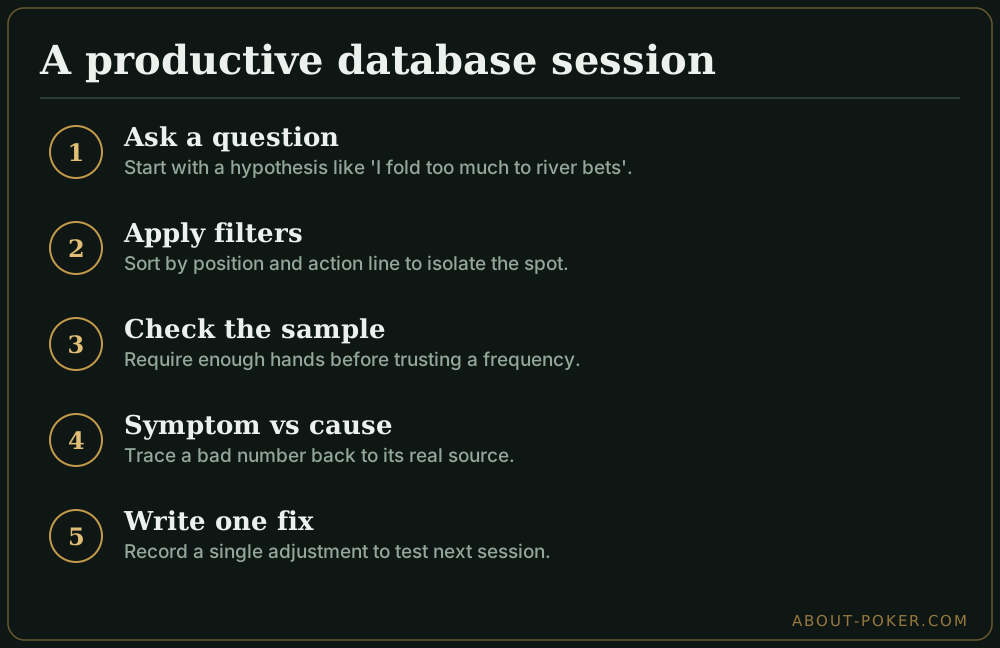
Before you close the tracker, confirm you did the following: you started with a specific question, you applied position and action-line filters, you checked the sample was large enough to trust, you separated symptom from cause, and you wrote down exactly one adjustment to test next session. If you can answer yes to all five, the session was study. If not, it was browsing.
The players who improve fastest are not the ones who play the most hands. They are the ones who ask their database the sharpest questions and act on the answers.
Frequently asked
How often should I review my database?
A short weekly session of 30-45 minutes beats a marathon once a month. Regular reviews keep leaks small and let you check whether a fix from last week actually changed your numbers. Tag hands as you play so the review queue builds itself.
What filters matter most for study?
Start with position and action line. Filtering by 'faced 3-bet in the cutoff' or 'c-bet flop then faced a raise' isolates a repeatable decision so you study a spot, not a random hand. Add stack depth and pot type once the basics look clean.
Can a database tell me if I'm winning?
Over a large sample, yes, but win rate needs tens of thousands of hands to stabilize. Use showdown and non-showdown winnings and all-in adjusted numbers to separate real edge from short-term variance.