What Is Won At Showdown in Poker?
Won At Showdown (W$SD) is the percentage of showdowns a player wins. Learn how it works, what a good number is, and how to read it against went-to-showdown.
On this page · 6 sections
“Won At Showdown,” abbreviated W$SD, is the HUD stat that tells you how often a player actually wins the pots they take to showdown. Where went-to-showdown measures how often they get there, won-at-showdown measures the quality of the hands they arrive with. Together, these two numbers are the fastest way to separate the calling stations from the solid regulars at any table.
What won at showdown measures
W$SD is conditional on reaching showdown: of all the hands a player showed down, what fraction did they win? A high number means they only carry strong hands to the river — they fold their weak stuff earlier. A low number means they show up at the river with too many losing hands, paying off value bets they should have folded. It is a direct read on the quality of an opponent’s calling decisions. For where it sits among the other stats, see poker HUD stats explained.
How it is calculated
Won At Showdown = (showdowns won ÷ showdowns reached) × 100
If a player reached showdown 80 times and won 41 of those, W$SD is 41 ÷ 80 = 0.51, or 51 percent. Note that winning a pot by betting opponents out before showdown does not count here — that is captured by won-when-saw-flop. W$SD strictly measures cards-on-the-table outcomes.
What is a good number
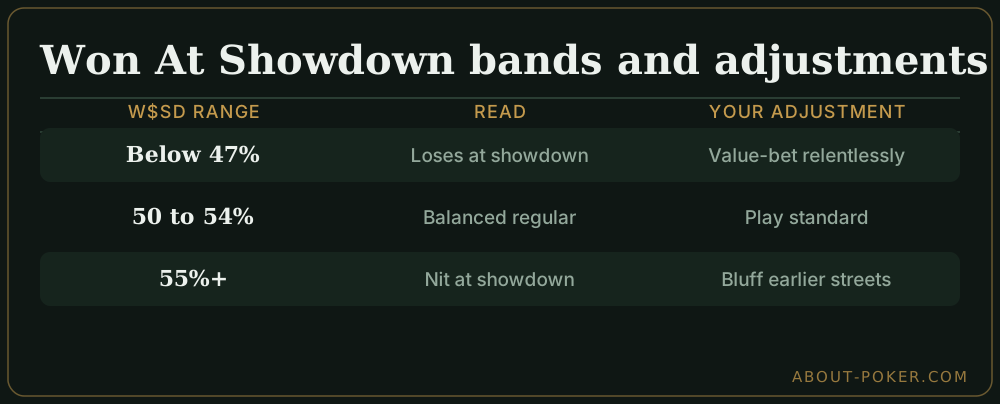
For six-max no-limit cash, the practical bands are:
- Below 47 percent — the player loses at showdown too often. If this pairs with a high went-to-showdown, you have a station: value-bet them thin and mercilessly.
- 50 to 54 percent — standard and balanced, where solid regulars sit. Above 50 percent is expected because losing hands often fold before showdown.
- Above 55 percent — the player only shows down premium hands, folding everything marginal earlier. When they do call to the river, respect it; but you can also bluff them off medium hands on earlier streets.
The number only becomes meaningful next to went-to-showdown, which is why they are almost always read as a pair.
A worked example
Two opponents both have a went-to-showdown of 32 — both reach showdown a lot. But their won-at-showdown numbers differ: Player A reads W$SD 44, Player B reads W$SD 53, each over 700 hands.
Player A (32/44) is a pure calling station: they call too much and arrive at the river with too many losers. Against them, you bet your top pair and second pair for value on every street and never bluff. Player B (32/53) reaches showdown often but wins there — they are seeing a lot of cheap showdowns and folding when it gets expensive. Against Player B, thin value on the river is less profitable, and a well-timed bluff on a scary card can work because they will fold hands that would beat you. Same went-to-showdown, opposite strategies, and only won-at-showdown reveals the difference. See what is went to showdown in poker for the companion read.
Common mistakes
The first mistake is reading W$SD alone. On its own, 50 percent is unremarkable; it is the combination with went-to-showdown that classifies the player. The second is misreading a high W$SD as “good player” — a very high number often just means an extreme nit who folds everything but the nuts, which is its own exploit.
The third is the ever-present sample-size trap. Showdown stats are among the slowest to stabilize because each showdown is a large, chunky data point. Give it 400 to 500 hands before you trust the read, and treat anything under 100 showdowns as a rough hint rather than a firm number.
A fourth mistake is forgetting that your own line shapes the number you should expect to beat. If you only ever bet three streets for value, the showdowns you reach against a station will naturally show them winning less; if you also bluff, you feed their won-at-showdown when your bluffs get called. Interpret the stat in light of how you have been playing against that specific opponent, not as a fixed property of them alone.
Quick checklist
- Require a healthy sample — 400+ hands — before trusting it.
- Below 47 with high WTSD: a station, value-bet relentlessly.
- 50 to 54: standard, balanced opponent.
- 55+: a nit at showdown, bluff earlier streets.
- Always read it beside went-to-showdown, never alone.
- The 32/44 profile is the classic paying-off calling station.
Paired with went-to-showdown and the aggression stats, won-at-showdown lets you decide the two things that matter most on the river: whether to bet thin for value, or fire a bluff — the difference between a winning and a losing session.
Frequently asked
What is a good won at showdown percentage?
Around 50 to 54 percent is standard for a solid six-max regular. Below 47 percent, especially paired with a high went-to-showdown, flags a calling station losing at showdown. Above 55 percent usually means the player only shows down strong hands.
How is won at showdown calculated?
Won At Showdown = (showdowns won ÷ showdowns reached) × 100. It only measures the hands that actually reached showdown, not pots won by betting opponents out earlier.
Why read won at showdown with went to showdown?
Went to showdown tells you how often a player reaches showdown, and won at showdown tells you how often they win once there. Together they instantly classify a player: high WTSD with low W$SD is the classic losing station.