Poker Tournament Tips and Tricks That Actually Win
Practical poker tournament tips and tricks: play tight early, steal blinds late, respect ICM near the money, and stop punting your stack in bad spots.
On this page · 8 sections
The tournament tips that actually move your results come down to a few disciplined habits: play tight and cheap early, attack blinds and antes as they grow, respect the money bubble when you’re short, and stop calling off your stack as a big underdog. Do those four things and you’ll out-cash most of the field before you ever learn a single advanced concept.
Tournaments punish undisciplined players slowly, then all at once. A handful of avoidable mistakes — gambling in level one, freezing near the money, calling all-ins with hands that should be folds — quietly drains the chips that separate a deep run from an early rail trip. This guide fixes the leaks that cost beginners the most.
Play tight and cheap in the early levels
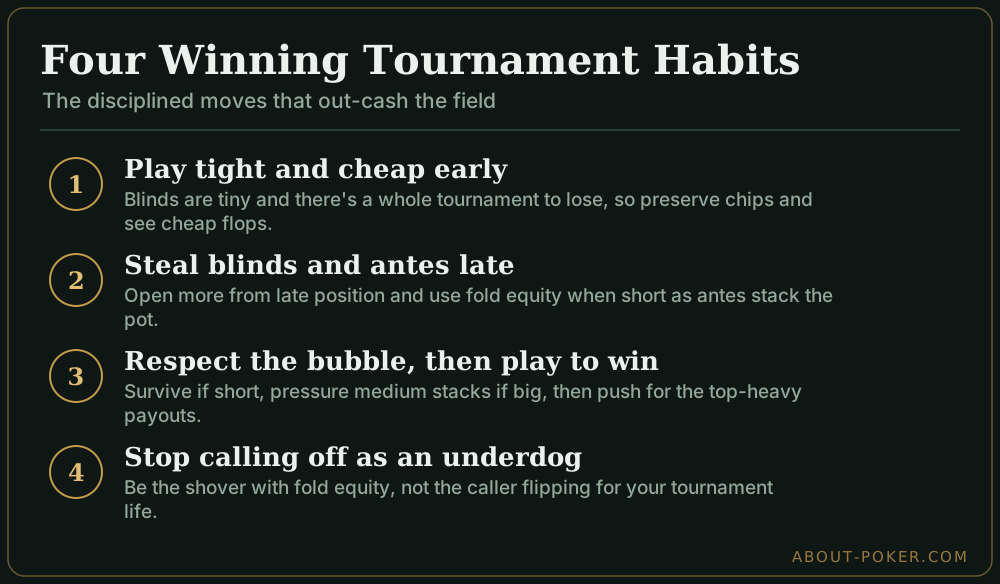
Early in a tournament the blinds are tiny relative to stacks, so there is almost nothing to win by gambling and a whole tournament to lose. Beginners routinely torch their stack in the first hour chasing flush draws and calling three-bets out of curiosity.
The fix is simple: play strong hands from good positions and see cheap flops with speculative hands when the price is right. You don’t need to accumulate a monster stack in level one — you just need to still be in the tournament when the blinds climb and real edges appear. Dig into the details in the early-stage guide.
Steal blinds and antes as the pressure rises
Once antes are in play, every pot has a real reward sitting in the middle before anyone acts. Winning the blinds and antes uncontested might add 10–15% to a short stack, and it costs nothing when everyone folds.
- Open-raise more from late position. The button and cutoff let you steal against only the blinds.
- Target tight players. Someone folding too much is a printing press for your chip stack.
- Use fold equity when short. Shoving all-in first is far stronger than limping and hoping. See the math in the push-fold guide.
Good stealing is really just applied preflop fundamentals — position, range, and fold equity working together.
Respect the bubble, then play to win
The money bubble is where fear peaks and chips change hands cheaply. If you’re short, tighten up and survive to lock in a cash. If you’re big, hammer the players who can’t call without busting — that’s where bubble strategy and the ICM framework earn you free chips.
The reason is ICM: near the bubble, chips you might lose are worth more than chips you might win, because busting costs you a whole payout while doubling up rarely doubles your equity. In practice that means the big stack should shove relentlessly and the medium stacks should fold hands they’d snap-call in a cash game — a middling ace that’s a fine call for chips can be a clear fold for real-money equity when a shorter stack is about to bust behind you.
But don’t let survival become the whole plan. Most of the prize pool is stacked in the top few finishes, so once you’re safely in the money, shift gears and play for the final table rather than folding into a min-cash.
Stop calling off your stack as an underdog
The most expensive beginner habit is calling all-ins with hands that need to improve. Calling A-9 off against a shove might feel brave, but you’re often flipping or worse for your tournament life with no fold equity to bail you out.
Instead, put the pressure on others. Shove first with a reasonable range and let them make the tough call. When you’re the caller, demand a genuinely strong hand — your tournament life is the most valuable thing you own.
More tournament tips and tricks
The four habits above win the most chips, but a full toolkit rounds them out. Here are the practical tips searchers ask about most.
- Size your opens to 2–2.5bb once antes are in. Deep and early you can go 3bb, but as antes stack the pot you’re risking less to win more — a 2.2bb open still folds out the field while keeping your steal cheap. When you 3-bet, size to roughly 3x an in-position open and a bit more out of position.
- Learn the bb thresholds for push/fold. Around 15–20bb you can still open-raise and fold to pressure, but below ~15bb shoving becomes your main weapon and below ~10bb it’s often shove-or-fold. Under ~7bb you’re in pure push/fold — waiting for a “great” hand just blinds you out. See the push-fold guide for exact ranges.
- Steal wider from late position — but with real hands. From the button with 15–25bb and folds to you, a stealing range of roughly the top 40–45% (any pair, any ace, any two Broadway, most suited connectors and suited kings) is standard against tight blinds. Tighten it fast if the blinds fight back.
- Pick a buy-in your bankroll can absorb. For MTTs, aim for at least 100 buy-ins for the level you play — variance is brutal, and even great players go 50+ tournaments without a big score. Move down a level after a rough stretch rather than chasing losses.
- Use late registration and re-entries with intent. Registering late saves you the tedious early levels and lets you sit down closer to the phase where your edge is biggest. If a tournament allows re-entry, treat those bullets as part of your buy-in budget, not free gambles — plan for one or two, not ten.
- Choose your table and read the players. Note who opens too much, who never folds, and who tightens up near the money — then target the fold-prone players and stay out of the way of the maniacs. A short-handed or soft table is worth more than a slightly bigger stack at a tough one.
Quick-reference tips by stage
| Stage | Stack behavior | Do this | Avoid this |
|---|---|---|---|
| Early (deep) | Preserve | Play strong hands cheaply | Gambling for tiny pots |
| Middle | Accumulate | Steal blinds, apply pressure | Playing scared |
| Bubble | Survive or attack | Shove if short, pressure if big | Calling off light |
| Final table | Play to win | Target medium stacks, ladder | Folding into last place |
Worked example: the classic beginner punt
You’re 25 minutes into a $50 tournament with a starting stack of 20,000 chips at 100/200 blinds. You limp J♣ T♣, a raise makes it 700, two players call, and you call. The flop comes Q♠ 9♦ 2♥, giving you an open-ended straight draw. Someone bets, another raises, and you face a decision for a third of your stack.
The disciplined play is an easy fold. You have a draw, not a made hand, the price is bad, and there is a full tournament left to play. Beginners talk themselves into calling “because I have outs,” lose the flip, and rebuild from nothing. The chips you save here are the chips that let you attack the bubble later.
Bottom line
Tournament success is mostly about avoiding disasters and pressing edges at the right time. Play tight and cheap early, steal aggressively as antes grow, respect the bubble, and stop calling off as an underdog. Master those habits, then layer in advanced concepts. Start from the tournament strategy hub to see how each phase fits together.
Frequently asked
What is the most important poker tournament tip for beginners?
Preserve chips early and get aggressive late. Most beginners do the opposite — they gamble in the first levels when there's nothing to win and freeze up near the money when stealing pays the most. Flip that instinct and you'll cash more.
How tight should I play in a poker tournament?
Tighter than a cash game early, looser than you think late. In the first levels play strong hands from good positions. As blinds rise and antes kick in, widen your stealing range because winning the blinds and antes uncontested becomes worth a big chunk of your stack.
Should I try to win or just cash a tournament?
Play to win. Most of the prize pool sits in the top few spots, so laddering into a min-cash and then folding away your stack leaves money on the table. Survive the bubble, then push for chips to reach the final table.
What is the biggest mistake in tournament poker?
Calling off your stack as a big underdog. Beginners call all-ins with hands that need to improve rather than shoving first for fold equity. Be the aggressor: it lets you win pots two ways instead of one.