Razz Fifth Street Play
Fifth street is where Razz pots get big and decisions get real. Learn how to read exposed low cards, count outs, and know exactly when to keep drawing.
On this page · 6 sections
Razz is seven-card stud played for the lowest hand, and fifth street is the hinge the whole pot swings on. The bets double here, the board tells you a lot, and the difference between a made low and a rough draw becomes the difference between value and disaster. If you play the first two streets loose and the last two carelessly, Razz will quietly bleed you. Getting fifth street right is the single biggest skill in the game.
Why fifth street decides the pot
In Razz you make the best five-card low, with straights and flushes ignored and the ace playing low, so the perfect hand is 5-4-3-2-A, the wheel. Through third and fourth street the bets are small, so mistakes are cheap. On fifth street the stakes jump to the big bet and you now hold five of your seven cards. That means most of your hand is defined: you either have a made low, a strong draw, or a hand that has been ruined by a pair or a high card.
The board is unusually readable here because everyone’s up cards are face up. Unlike Omaha hi-lo strategy, where low draws hide behind four hidden hole cards, in Razz you can literally count the low cards your opponents are showing and estimate how good their hand is. Fifth street is where you convert that public information into a fold, a call, or a raise.
Reading exposed low cards
Start by scanning every opponent’s up cards. Three exposed low cards with no pair is a serious threat; that player almost certainly has a made or near-made low. Two low cards and a paint card is a marginal holding you can often pressure. Your read is only as good as your card-counting, so track which low ranks are dead.
Dead cards are the heartbeat of Razz. Every ace through eight you see in an opponent’s board or in the muck is a card you cannot draw. If you hold 7-6-4-2 needing one more low card and you can see that three of the fives, two of the threes, and two of the eights are already exposed elsewhere, your draw is far weaker than it looks. This live-card thinking is the same discipline that separates winners in PLO 8-or-better strategy: you are always asking how many of your outs are still in the deck.
A worked example
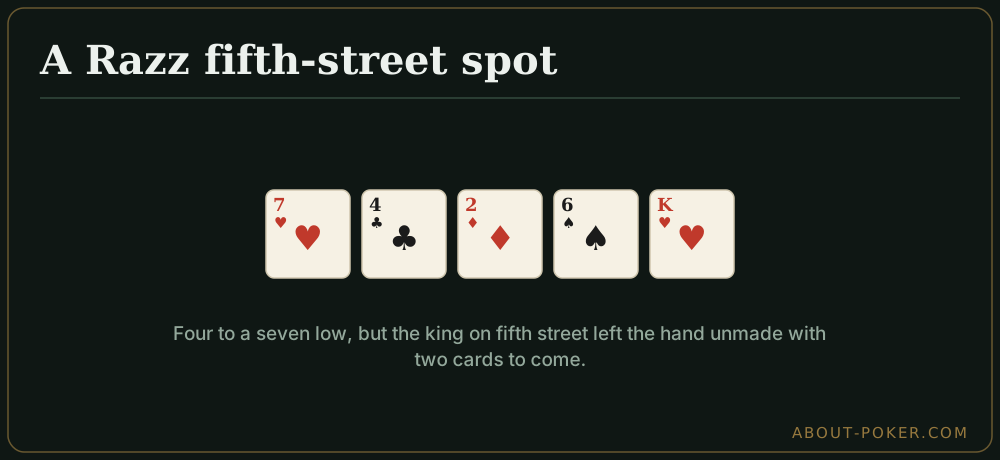
Say your first five cards are (7-4) 2-6-K, so you have a strong four-card seven low (7-6-4-2) but just caught a king on fifth street. Your best five-card low right now is not made; you have four to a seven and need one more card eight or lower to complete.
An opponent is showing 3-5-8-2 on their board with no pair, a made eight low or better. You are behind. Count your outs: you need an ace, three, five, or eight to make a strong low (a five would give you 6-5-4-2-A style holdings, careful of duplicates). That is roughly four ranks times four suits minus dead cards. If two of those low cards are visible elsewhere, you may have only nine or ten clean outs with two cards to come. Against a made low, a strong multi-out draw can call one big bet, but if the pot is small and you are also facing a likely raise, folding a rough draw is correct. The king did real damage: it added a high card you must eventually beat and used up one of your seven card slots.
When to raise, call, or fold
Raise on fifth street when you have a made low that is likely best, such as an eight or better while opponents show broken or high boards. Raising builds the pot with the lead and can fold out live draws before they catch. A made seven low against a player showing two high cards is a clear raise for value and protection.
Call when you hold a strong draw with many live outs and reasonable pot odds, or when you have a made low that is decent but not dominant and want to control the pot size. Calling keeps you in without committing big money on a marginal edge.
Fold when your hand is dead or nearly so: you paired, you caught two high cards, or your draw is drawing thin against an opponent’s made low. Discipline matters because Razz pots that go to seventh street are expensive, and continuing with a rough draw into a made hand is how bankrolls disappear. Razz is one of several mixed games worth studying alongside Omaha poker variations if you play in dealer’s-choice or HORSE lineups.
Common fifth-street mistakes
The biggest error is ignoring dead cards. Beginners see a four-card eight and assume it is a favorite, never noticing that half their outs are already exposed. The second mistake is calling with paired boards; a pair kills your low because Razz counts your five best distinct low cards and a pair forces a higher card into your hand. The third is failing to raise made lows, which lets cheap draws chase you down on sixth and seventh street.
Fifth-street checklist
Before you act, run through five quick questions. Do I have a made low, a draw, or a busted hand? How many of my outs are live after counting exposed and mucked cards? What is the best hand my opponents’ boards can hold? Are the pot odds high enough to keep drawing? And is a raise better than a call because it wins now or charges live draws? Answer those honestly and you will make far more money on fifth street than the players who simply keep calling and hoping.
Frequently asked
What is fifth street in Razz?
Fifth street is the third betting round of Razz, the point at which each player has five cards (three down was not the case in Razz; players start with two down and one up, then receive additional up cards). By fifth street the betting doubles to the big bet, so pots grow quickly and the quality of your low really matters.
When should I fold on fifth street in Razz?
Fold when you have paired or hold a rough draw while an opponent shows three low cards that beat your made hand. If you are drawing to a low that is already worse than a made hand your opponent likely has, and you have to call a big bet with only one or two clean outs left, the drawing odds usually do not justify continuing.
How many outs does a Razz draw have on fifth street?
It depends on how many of your needed low cards are still live. A four-card eight looking for one more low from ace through eight might have close to 20 clean outs at the start, but subtract every matching rank you see exposed in other hands and every card you already hold. Dead cards shrink a draw fast.