Courchevel Basics
Courchevel basics: the Omaha variant that flips one flop card before betting, how the exposed card shapes ranges, hi-lo split rules, and a worked example.
On this page · 7 sections
What makes Courchevel different
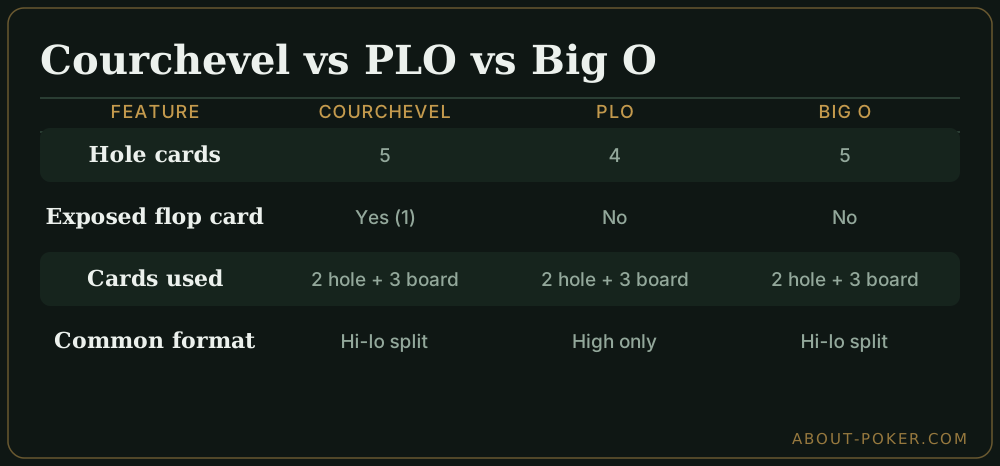
Courchevel is an Omaha variant with one memorable twist: before the first betting round, the dealer turns the first community card face up. Every player then acts knowing one of the flop cards. On top of that, you are dealt five hole cards rather than the four of standard Pot-Limit Omaha. Those two features, the extra hole card and the exposed board card, make Courchevel a game of unusually rich preflop information. For the exact dealing sequence and betting caps, the Courchevel poker rules have the full walkthrough; this guide covers the basics of how to think about it.
The exposed card is shared information
The single face-up card is the heart of Courchevel strategy. Because everyone sees it before betting, it shifts the value of every hand at once. If the exposed card is an ace, low hands and ace-based highs jump in value across the table; if it is a middling card that fits few hands, ranges tighten. Your job is to evaluate how well your specific five cards combine with that one card, remembering that after two more flop cards arrive you still must use exactly two of your hole cards and three from the board.
Five hole cards, same two-card rule
The five hole cards feel powerful, and they do produce big hands, but the Omaha rule is unchanged: exactly two hole cards plus exactly three board cards. Beginners coming from Big O or PLO often overvalue the extra card, thinking five cards means more outs than they really have. In truth the extra card mostly increases the number of two-card combinations you hold, which raises the frequency of strong hands for everyone, so relative hand values, not absolute ones, decide pots. If Big O is new to you, the Big O poker rules explain the closest five-card cousin.
Hi-lo split, most of the time
Courchevel is most commonly dealt as hi-lo eight-or-better, splitting the pot between the best high hand and the best qualifying low, which is any five-card hand with all cards eight or lower. As in every split game, the prize is the scoop and the trap is playing one-way hands that get quartered. With five hole cards and a visible board card, two-way potential is common, so favor hands that can chase both halves rather than committing to a lone low or a lone high.
A worked opening decision
Suppose the exposed flop card is the As, and your five hole cards are Ac 2c 3h 9d Ts. This is a premium Courchevel start. You hold the second ace and low cards 2-3 that pair beautifully with the exposed ace for nut-low potential, plus a suited ace-deuce in clubs for a low flush draw. Because the board already shows an ace, the chance of a wheel-type low is elevated for everyone, so you want to be in with genuine two-way strength, and this hand qualifies: you can chase the nut low and back it with an ace-high flush or better. Contrast that with the same five cards when the exposed card is the Kh: your low cards now connect far less, and you would open far more cautiously. The one visible card swings the hand from a raise to a fold-or-call.
Common Courchevel mistakes
- Ignoring the exposed card and evaluating your five cards as if it were standard Omaha.
- Forgetting the two-card rule and counting five hole cards as extra outs they do not provide.
- Playing one-way low or one-way high hands in the split version and getting quartered.
- Overvaluing raw five-card holdings when everyone at the table is also holding stronger-than-Omaha hands.
A starting checklist
Before you act, read the exposed card first and ask how well your five cards combine with it. Prefer two-way hands in the hi-lo version, and demand nut potential rather than second-best draws, because with five hole cards the whole table makes big hands. When the exposed card fits your hand, apply pressure; when it does not, fold cheaply and wait. Keep the Courchevel poker rules handy for the dealing order, and treat that one face-up card as the compass for every decision you make in the game.
Frequently asked
What is Courchevel poker?
Courchevel is an Omaha variant where each player receives five hole cards and the first community card is dealt face up before the opening betting round. You still must use exactly two hole cards and three board cards. It is commonly played as a hi-lo split game, though high-only versions exist.
How many hole cards do you get in Courchevel?
Five hole cards, one more than standard Pot-Limit Omaha and the same as Big O. As in all Omaha games you must use exactly two of your hole cards combined with exactly three community cards to make your five-card hand.
Why is the first flop card exposed in Courchevel?
Dealing one board card face up before the first bet is what defines Courchevel. It gives every player shared information before any money goes in, so you can evaluate how well your five cards connect with that specific card and adjust your opening decisions accordingly.
Is Courchevel usually hi-lo?
Courchevel is most often played as hi-lo eight-or-better, where the pot splits between the best high hand and the best qualifying low. High-only Courchevel exists too. Confirm which version you are playing, because it changes starting-hand selection dramatically.