Playing the Cutoff
The cutoff is the second-best seat in poker, one off the button. Learn the wide steal range, how to play against the button, and post-flop discipline.
On this page · 6 sections
The cutoff is the second-most powerful seat in poker, sitting one to the right of the button. Only the button and the two blinds act after you, which means you can open a wide range, steal the blinds relentlessly, and play most pots in position. The one player who has position on you — the button — is the key to playing the seat well. Master the cutoff and you unlock a huge chunk of your win rate, because these late-position steals add up over thousands of hands.
Why the cutoff is so profitable
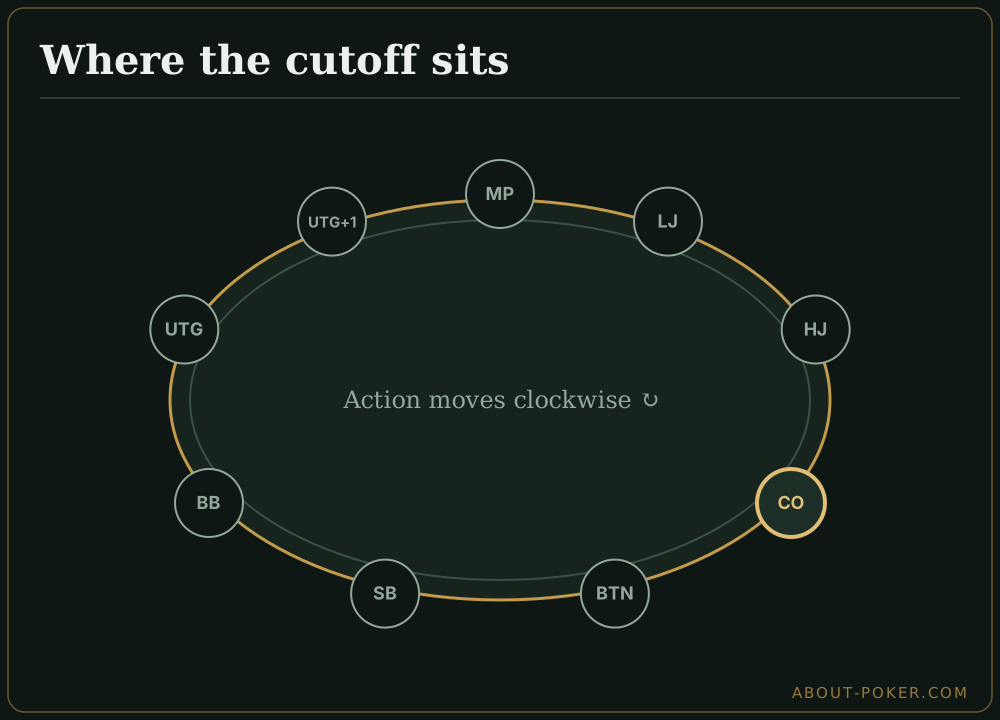
Position is worth money on every street, and from the cutoff you’ll be in position against everyone except the button. When you open and the blinds call, you act last on the flop, turn, and river — you see what they do before deciding, control the pot size, and bluff more effectively. That positional edge is why the cutoff opens far wider than any middle seat and trails only the button itself.
The name captures the strategic idea: by raising from the cutoff you “cut off” the button’s chance to attack the blinds first. You seize the initiative before the strongest seat can use it.
The cutoff opening range
A standard full-ring cutoff range is about 25-30% of hands. On top of the hijack range you add:
- Nearly all suited hands down to weak suited kings and queens: K7s, Q8s, J8s
- All suited connectors and gappers: 65s, 54s, T8s, 97s
- A broad set of offsuit broadways: A9o, KTo, QTo, JTo
- All pocket pairs
In 6-max the cutoff opens even wider, often north of 30%. Keep it laddered: the cutoff should be tighter than your button range but clearly wider than the hijack, which you can confirm against a full range chart by position.
A worked example: stealing and getting called
Folded to you in the cutoff with Jc-9c, you open to 2.5 big blinds. The big blind calls; the button and small blind fold. The flop comes Kd-9h-4s. You have middle pair with a backdoor flush draw, and crucially you’re in position against the big blind. You can make a small continuation bet: if called, you can barrel good turns or check back and realize your equity cheaply. This is the cutoff’s edge in action — a marginal made hand becomes playable because you always act last against this opponent.
Now suppose you open the same J9s and the button 3-bets. The button is the one player with position on you, so J9s is a fold — you don’t want to play a speculative hand out of position against a strong seat. That single distinction, in position versus out of position, drives every cutoff decision.
Common cutoff mistakes
- Opening too tight. Many players treat the cutoff like a middle seat and leave money on the table. With only three players behind, you should be stealing aggressively.
- Ignoring the button. The button can flat or 3-bet in position. Widen or tighten your steals based on how active the button player is.
- Over-bluffing multiway. If both blinds call your open, you’re in a three-way pot — dial back the automatic continuation bets and lean on your stronger hands.
- Failing to 4-bet. Against a button that 3-bets your steals often, you need a value 4-betting range (QQ+, AK) plus a few bluffs, or you’ll get exploited.
Adjusting to opponents
The single biggest read is the button. If a passive, tight player sits there, you can open your widest cutoff range and steal almost at will. If an aggressive 3-bettor is on the button, tighten your opens, drop the weakest offsuit hands, and be ready to fight back with 4-bets on your premiums.
The blinds matter too. Against blinds that fold too much, widen your steals — you win the 1.5 big blinds uncontested a huge percentage of the time. Against blinds that defend wide and play well, tighten slightly and rely on your positional edge post-flop rather than pure fold equity.
Cutoff checklist
- Am I opening a wide, aggressive range (~25-30% full ring, more in 6-max)?
- Have I read how the button plays back at my steals?
- Am I ready to 4-bet my premiums if the button 3-bets?
- Am I dialing back aggression in multiway pots?
The cutoff is a steal engine and an in-position machine. Open wide, attack the blinds, respect the button, and let the seat’s structural advantage compound over time. When you fold the button around to yourself next hand, you’ll have even more power — but the cutoff is where late-position profit really begins.
Frequently asked
Where is the cutoff in poker?
The cutoff is the seat directly to the right of the button — one off the dealer. It's the second-best position at the table because only the button and the two blinds act after you.
How wide should you open from the cutoff?
Around 25-30% of hands in full ring and often 30%+ in 6-max. You can add nearly all suited hands, most suited connectors, and a broad set of offsuit broadways because only three players remain to act.
Why is the cutoff called the cutoff?
The name comes from the ability to 'cut off' the button — by raising from this seat you can take the initiative and often win the pot before the button gets to use its positional advantage against the blinds.
How do you play the cutoff when the button 3-bets?
The button is the one seat with position on you, so play a solid continuing range: 4-bet your premiums for value, call with hands that flop well in position against the blinds, and fold the weakest steals. Don't get run over, but respect that you'll be out of position to the button.