Positional Awareness Basics
Positional awareness is knowing how your seat shapes every decision. Learn the basics of acting last, information edges, and playing tighter out of position.
On this page · 6 sections
Positional awareness is the single most valuable habit a developing player can build. It means never looking at your two cards in a vacuum — you always read them through the lens of where you are sitting. The same King-Jack is a comfortable raise on the button and a trap under the gun, and until that idea is automatic, you will leak chips in spots that feel fine in the moment.
What positional awareness actually means
Position is your seat measured against the dealer button. The button acts last on every post-flop street, so it holds the most power; the blinds act first after the flop, so they hold the least. Positional awareness is simply the discipline of running every decision through that filter: Will I act before or after my opponents on later streets, and how does that change what this hand is worth?
A player without positional awareness plays their cards. A player with it plays their cards, their seat, and their opponents’ likely reactions all at once. That shift — from “what do I have?” to “what do I have, and who has to act before me?” — is the core of solid poker. If you want the full argument for why this matters, why is position important in poker walks through the underlying logic in detail.
The information edge of acting last
The concrete reason position matters is information. When you act last, you have already watched every opponent check, bet, or raise before it is your turn. That knowledge lets you do four things better:
- Value bet thinner. If everyone checks to you, weak top pair becomes a profitable bet.
- Bluff smarter. Widespread weakness (checks all around) is a green light; early aggression is a stop sign.
- Control the pot. You can check behind to keep the pot small with a medium hand, or build it with a strong one.
- Realize equity. You rarely get blown off a hand, because you always see the price before you commit.
Out of position, all four of these are harder. You bet or check into the unknown and then react to whatever comes back. This is exactly the dynamic covered in in position vs out of position, and it is why the same hand is simply worth more in a later seat.
A worked example: pocket eights, two seats
Picture 100 big blind cash. You are dealt 8-8. First case: you are under the gun at a 9-handed table. You raise, the button calls, and the flop comes Q-7-2. You have to act first with no idea what the button holds; you check, they bet, and you are guessing whether you are ahead. Pocket eights here realizes maybe half its raw equity because you are navigating blind.
Second case: same 8-8, but now you are on the button and the cutoff opens. You call. The same Q-7-2 flops, the cutoff bets, and you have full information — you see the sizing, you know their range, and you can call one street and reassess. If it checks to you on a later street, you can take a free card or bet for value against a capped range. The identical hand earns far more from the button seat, and nothing changed but position. That single comparison is positional awareness in action.
How your range should shift by seat
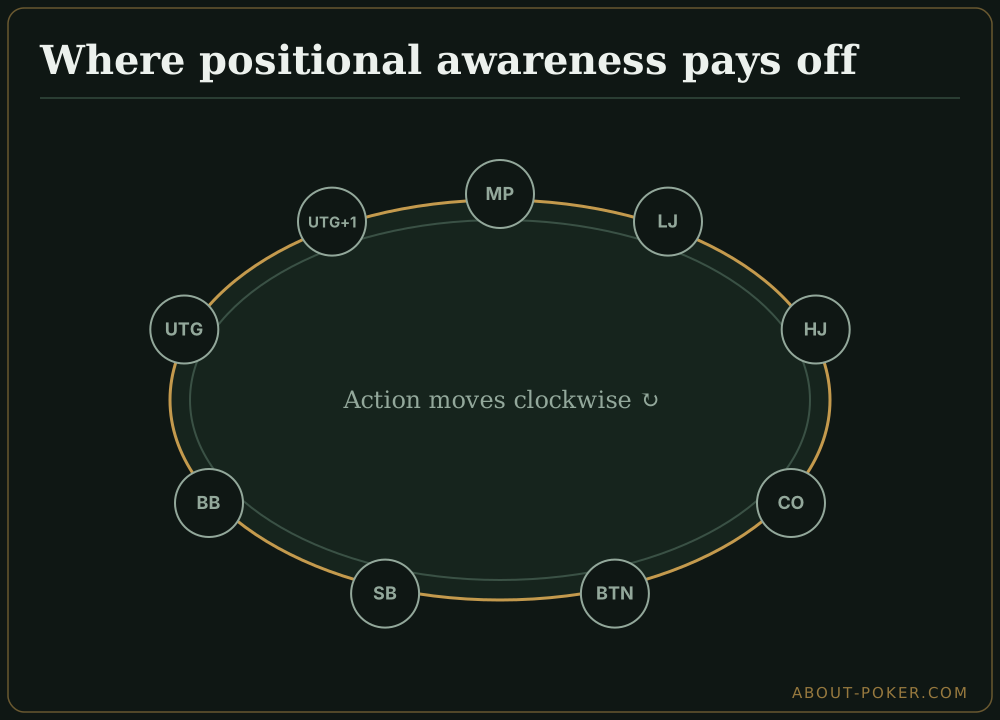
Positional awareness shows up most clearly in how many hands you play from each seat. Early position demands a tight, high-quality range because several players still act behind you and you will likely be out of position post-flop. As you move toward the button, you can open wider — suited connectors, weaker broadways, small pairs — because your seat compensates for the marginal holdings.
A simple mental model: the button might profitably open around 45–50% of hands, the cutoff around 25–30%, and under the gun closer to 15%. You do not need to memorize exact percentages to start; you need the instinct that later seat means more hands, earlier seat means fewer. For a deeper walkthrough of the mechanics, see understanding position in poker.
Common positional-awareness mistakes
- Playing the same range everywhere. Opening the same hands under the gun and on the button is the most expensive beginner leak.
- Calling too much from the blinds. The blinds are the worst seats; defending too wide out of position bleeds chips street by street.
- Ignoring who is left to act. A raise with three players behind is very different from a raise with only the blinds behind.
- Forgetting position after the flop. Position is not just a pre-flop concept — it governs every street, and the button’s edge grows as the hand goes on.
A quick checklist to build the habit
Before you act on any hand, run this sequence:
- Name your seat: button, cutoff, hijack, blinds, or early.
- Ask: will I act first or last after the flop?
- Adjust your range: tighter early, wider late.
- In position, lean toward calling and controlling; out of position, lean toward folding marginal hands or betting to seize initiative.
- On every post-flop street, use the information your seat gives you before you decide.
Do this on every hand for a few sessions and it stops being a checklist — it becomes reflex. That reflex is positional awareness, and it quietly separates winning players from everyone still just playing their cards.
Frequently asked
What is positional awareness in poker?
Positional awareness is the habit of factoring your seat relative to the button into every decision — which hands to play, how much to bet, and when to bluff or fold. It means recognizing that the same hand is worth more when you act last and less when you act first.
Why does acting last give an advantage?
The player who acts last on each betting round sees what everyone else does before deciding. That extra information lets you value bet thinner, bluff more accurately, control the pot size, and fold hands that face aggression, all of which add up to a large long-term edge.
Should I play tighter out of position?
Yes. Out of position you have less information and less control, so weak and marginal hands lose more money than they do in position. Tightening your opening and calling ranges out of position is one of the fastest ways to plug leaks.
How do I develop positional awareness quickly?
Before every action, name your seat out loud or in your head — button, cutoff, big blind — and ask whether you will act first or last after the flop. Doing this on every hand for a few sessions turns position into an automatic filter on your decisions.