Stealing Blinds by Position
Blind stealing is free profit if you do it by position. Learn steal ranges from the cutoff, button, and small blind, plus the math that makes it work.
On this page · 6 sections
Stealing the blinds is some of the easiest money in poker. When the action folds to you in late position, the pot already contains 1.5 big blinds of dead money, and the two players who posted it are forced to act with random hands. Raise with a wide, position-appropriate range and you’ll scoop that dead money far more often than you lose. Done consistently, blind stealing can be the difference between a break-even player and a winner.
Why stealing works: the math
Suppose you make a standard steal raise of 2 big blinds when folded to you. You’re risking chips to win the 1.5 big blinds already in the middle. If both blinds fold, you profit immediately. A quick way to think about it: a min-raise steal only needs the blinds to fold somewhere around 55-60% of the time to break even on fold equity alone — and that ignores the times you get called and win at showdown or with a continuation bet.
Because the best position to raise from is the one with the fewest players behind you, the later you are, the fewer hands need to fold and the wider you can steal. That’s the whole engine behind stealing by position.
Steal ranges by position
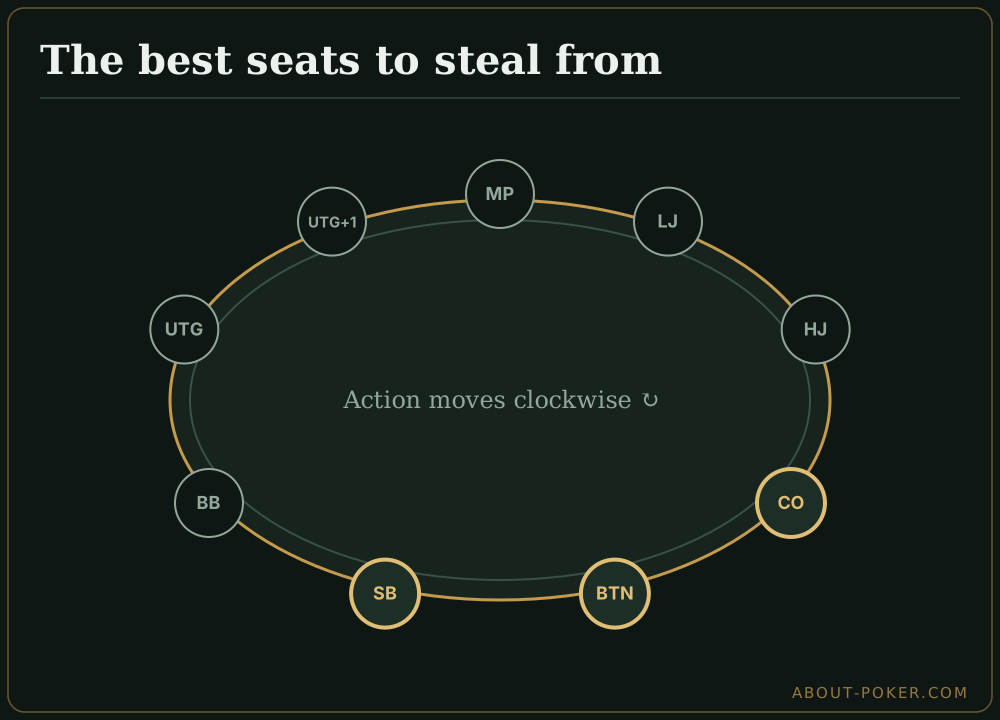
The number of players behind you dictates how wide you steal:
- Cutoff (three players behind): roughly 25-30% of hands. Add most suited hands, suited connectors, and offsuit broadways to your opening range. See more on playing the cutoff.
- Button (two players behind): about 40-50% of hands — the widest steal at the table. Nearly all suited hands, all pairs, and a huge chunk of offsuit hands are profitable opens. This is why the button is the best seat.
- Small blind (one player behind): you can raise a wide range against a folding big blind, but you’ll be out of position if called, so use raise-or-fold with a larger size, around 3 big blinds.
A worked example
You’re on the button with 8h-6h, folded to you. You raise to 2.2 big blinds. The small blind folds and the big blind folds too — you win 1.5 big blinds without seeing a flop. That’s a clean steal. Now the same hand, but the big blind calls. The flop comes Kc-9h-3h, giving you a flush draw. Because you’re in position, you can continuation-bet or check back and realize your equity cheaply. Even the times your steal gets called, position lets you win more than your fair share.
Multiply this across a session: if you attempt a steal from the button, say, 20 times an hour and pick up 1.5 big blinds outright even half the time, that’s 15 big blinds an hour before you play a single flop.
Common blind-stealing mistakes
- Stealing too narrow from the button. A tight button range leaves easy dead money on the table. If you’re not opening close to half your hands when folded to you on the button, you’re too passive.
- Stealing too wide out of position. From the small blind you’ll be out of position if called; opening a button-sized range there loses money.
- Ignoring the blinds’ tendencies. A tight big blind who folds a lot lets you steal any two cards; a station who never folds means you should tighten and value-bet instead.
- No post-flop plan. Steals get called. If you have no idea how to play the flop, your steal range is just a way to donate chips.
Adjusting to the blinds
The players in the blinds are the whole story. Against blinds that over-fold, widen your steals mercilessly — you’re printing money on the dead blinds alone. Against blinds that defend wide and 3-bet aggressively, tighten your steal range, size up slightly, and be ready to continue against 3-bets with a defined range rather than folding every time.
Watch for the resteal too: good big blinds will 3-bet your button steals as a bluff, trying to blow you off marginal hands. Counter this by keeping a few strong hands in your steal range that can 4-bet or call, so you’re not exploitable.
Blind-stealing checklist
- Am I opening the right steal width for my seat (cutoff ~28%, button ~45%, small blind wide but raise-or-fold)?
- Have I read how each blind responds — fold, call, or resteal?
- Am I using a consistent, appropriate raise size?
- Do I have a flop plan for when my steal gets called?
Blind stealing is positional poker distilled: the fewer players behind you, the wider you attack, and the more of that dead money you take down. Steal by position, respect the resteal, and let the free 1.5 big blinds add up hand after hand.
Frequently asked
What does stealing the blinds mean?
Stealing the blinds means raising from a late position — usually the cutoff, button, or small blind — with a wide range, hoping the blinds fold so you win the dead money in the pot uncontested. It's one of the most consistent sources of profit in poker.
What is a good steal range from the button?
On the button you can open around 40-50% of hands when folded to you, because only the two blinds act behind you. That includes all pairs, most suited hands, and a wide swath of offsuit broadways and connectors.
How often do blinds need to fold for a steal to profit?
With a min-raise to 2 big blinds risking chips to win 1.5 in the blinds, your steal shows an immediate profit if the blinds fold roughly 60% of the time — and even when called you still have equity and position to realize more value.
Should you steal from the small blind?
Yes, but with a modified strategy. From the small blind you only have the big blind to get through, but you'll be out of position if called, so many players use a raise-or-fold range and raise slightly larger, sometimes mixing in limps at a lower frequency.