Sit & Go Bubble Play
The sit & go bubble is where ICM pressure peaks: how to abuse it as the big stack, survive it as the short stack, and stop bleeding chips as the mid stack.
On this page · 6 sections
The bubble is the most pressure-packed moment in any sit & go. In a standard single-table SNG that pays the top three, the bubble is four-handed — one more bust and everyone left cashes. This is where the ICM math you’ve been building toward all game finally dominates every decision. Chips stop being worth their face value, survival becomes an asset in itself, and the correct play often looks nothing like what a raw chip count would suggest.
Why ICM peaks on the bubble
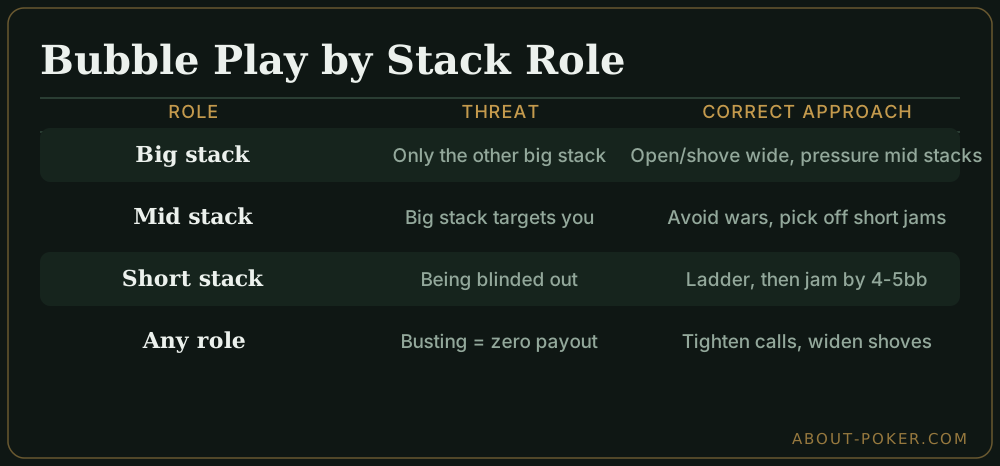
The core idea is simple: the chips you can lose are worth more than the chips you can win. If you bust on the bubble you get nothing, forfeiting a guaranteed pay jump. If you double up, you gain tournament equity but far less than the linear chip increase implies, because prize money is capped at the top spots. That asymmetry is the whole reason bubble play differs from the middle stage.
Here’s a concrete example. Say a $10 SNG pays $50 / $30 / $20 to the top three. Four players remain, and you and another short stack both have 8 big blinds while two big stacks tower over you. If you jam and get called by a big stack, you’re risking your entire ~$20-equity survival on a coin flip. Fold, and if the other short stack busts first, you slide into third — $20 for doing nothing. That is the ladder, and ICM is the reason it exists.
Big stack: abuse the bubble
If you have chips on the bubble, you hold the most powerful position in the game. The short and medium stacks cannot call you profitably because busting on the money bubble is catastrophic for them, while it barely dents you. So you weaponize that fear.
Open relentlessly, especially into the medium stacks who have the most to lose. Shove into short stacks who can only call with a premium. A big stack playing the bubble correctly might be putting pressure on 40% or more of hands, printing dead chips every orbit. The one adjustment: respect the other big stack and be careful jamming into a short stack that’s already committed, because a stack that’s down to 4 big blinds has almost no fold equity to fear and will call wide.
Short stack: survive with intent
Being short doesn’t mean playing scared — it means playing with a plan. Your goal is to ladder into the money, and sometimes the highest-equity move is to fold and let another short stack bust first. Watch the other short stacks: if someone has fewer chips than you and is about to be blinded all-in, tightening up can be worth an entire pay jump.
That said, don’t blind yourself down to dust. If you fall below about 4 to 5 big blinds, your fold equity evaporates and you must take the next reasonable shove. The skill is timing: fold marginal hands while another short stack is at risk, then jam the moment your survival window closes. Use the ranges from push-fold ICM — they are tighter on the bubble than in a chip-EV world.
Mid stack: the trap seat
The medium stack is the worst place to be on the bubble, and most players handle it badly. You’re big enough to bust the shorties but small enough that the big stack can bust you — so the big stack targets you relentlessly, and you can’t fight back without risking your tournament life.
The fix is disciplined selectivity. Don’t get into raising wars with the chip leader. Instead, pick off the short stacks when they jam into you with a hand strong enough to call, and avoid marginal confrontations with the big stack entirely. Let the shorties bust so you climb the ladder, and only take a stand when your hand or your fold equity genuinely justifies it.
Common bubble mistakes
- Calling all-ins too wide. A hand that’s a clear call for chips is often a clear fold under ICM. Tighten your calling range dramatically.
- Big stacks going passive. Sitting on your chips wastes your biggest edge. Attack the medium stacks every orbit.
- Short stacks jamming blind. Shoving any two out of panic ignores the ladder. Fold and let others bust when you can.
- Fighting the chip leader as a mid stack. You have the most to lose and the least fold equity against them. Avoid the war.
A bubble checklist
- Know the payouts. The pay-jump size sets the ICM pressure. Bigger jumps mean tighter play.
- Rank the stacks. Who’s covered, who covers whom, and who busts next.
- Match your role. Big stack attacks, short stack ladders, mid stack picks spots.
- Tighten your calls, widen your shoves. Fold equity is your friend; getting called is your enemy.
- Play the survival, not the chips. On the bubble, not busting is often the best result of the hand.
Master the bubble and the rest of the sit & go opens up — because everyone else is playing scared, and you’re the one who understands exactly why.
Frequently asked
What is the bubble in a sit and go?
The bubble is the point right before the money, when one more elimination puts everyone left into a paid finish. In a standard single-table SNG paying the top three, the bubble is four-handed. It's the highest-pressure phase of the game because busting there means winning nothing.
How should the big stack play the bubble?
Aggressively. As the big stack you can pressure the short and medium stacks relentlessly, because they can't call you without risking elimination on the money bubble. Open and shove wide, and force everyone else to fold their way into a tighter and tighter box.
How should a short stack play the SNG bubble?
Pick your spots and be willing to fold hands you'd normally shove. If a bigger short stack is about to bust, tightening up and letting them go first can ladder you into the money for free. But don't blind out to nothing waiting.
Why is ICM so important on the bubble?
Because chips you can lose are worth more than chips you can win near a pay jump. Busting on the bubble costs you the entire prize, while doubling up only adds equity. That asymmetry means you fold hands on the bubble that would be automatic calls in a chip-count-only world.