Sit & Go Middle Stage
The middle stage of a sit & go is where the game opens up: blinds bite, antes appear, and stealing plus re-stealing replaces the patient early-game grind.
On this page · 6 sections
The middle stage of a sit & go is where the game wakes up. In the early levels you sat tight and folded, because the blinds were a rounding error against your stack. Now the blinds have climbed, antes have appeared, and one or two players have already busted. Suddenly every pot has real chips in it, and folding around the table is no longer free — it is a slow leak. This is the phase where stealing, re-stealing, and stack awareness replace the patient waiting game of the early stage.
What defines the middle stage
The middle stage isn’t a fixed level number; it’s a stack-depth condition. It begins roughly when the average stack drops to 15 to 30 big blinds and antes enter the pot. That combination changes everything. With antes, a typical pot might already contain 1.5 big blinds of dead money before anyone acts, so winning it uncontested is genuinely worth chasing.
At this depth you still have room to play a flop, but not much room to make a mistake. You are no longer deep enough to speculate with small pairs and suited connectors out of position, and not yet shallow enough to be pure push-fold. That in-between quality is exactly what makes the middle stage the hardest phase to play well.
Attack the blinds — the mid-game engine
The core adjustment is aggression from late position. From the button and cutoff you should be opening a wide range to steal the blinds and antes. When the players behind you are folding too much — and in most low- and mid-stakes SNGs they are — a raise to 2 or 2.2 big blinds risks little to win a pot that is already worth more than a full big blind.
Here is a worked example. Blinds are 100/200 with a 25 ante at a six-handed table. Before any action, the pot already holds 100 + 200 + (6 × 25) = 450 chips, or 2.25 big blinds of dead money. You open the button to 450 with a hand like Q9 offsuit. Both blinds fold. You just won 2.25 big blinds risking 450 chips, and you did it with a hand you’d have folded in the early stage. Repeat that a few orbits and you’ve grown your stack without ever seeing a flop.
Tighten up out of position
The flip side of stealing wide is defending tight. When you’re in the blinds facing a late-position raise, resist the urge to call with speculative hands you can’t play profitably out of position. Calling bleeds chips when you miss the flop, and missing is the default outcome. Instead, lean toward a raise-or-fold approach: three-bet the hands strong enough to apply pressure, and let the rest go.
Re-stealing is the mid-game’s most profitable move against habitual button raisers. If a loose opener is raising every button and folding to three-bets, a re-raise (or a shove at shorter depths) with a hand like A5 suited or KJ prints chips. You don’t need a big hand to re-steal — you need a big fold percentage from your opponent. Understanding this dynamic is a bridge into ICM basics, where chip value stops being linear.
Watch the stacks, not just the cards
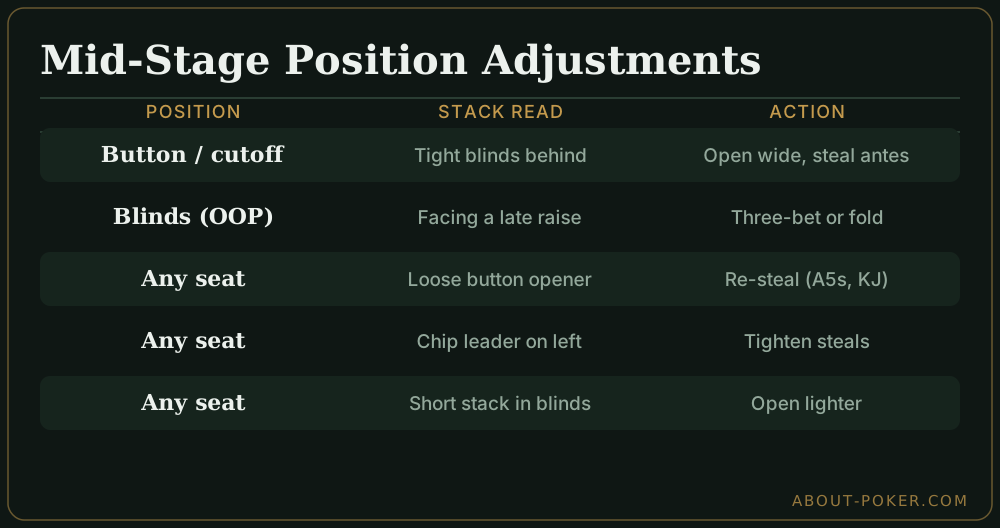
By the middle stage, stack sizes dictate strategy more than card strength. A raise from a 40-big-blind chip leader means something very different from a raise by a 9-big-blind short stack who is looking for a spot to shove. Before you act, glance around: who can hurt you, who is desperate, and who is just trying to survive to the money?
Position relative to the short stacks matters too. If a 6-big-blind player is in the blinds, you can open lighter, because their only real weapon is an all-in they won’t often make. If the chip leader is on your left, tighten your steals — they can flat or three-bet you at will. This stack-first thinking is what separates mid-game grinders from players who only read their own two cards.
Common middle-stage mistakes
- Still folding like it’s the early stage. Antes changed the math. Passivity here is a guaranteed slow bust as the blinds eat you.
- Calling raises out of position. Flat-calling from the blinds with dominated hands is the fastest mid-game leak there is. Three-bet or fold.
- Ignoring antes in the pot odds. The dead money makes marginal steals and light three-bets profitable. Count it every hand.
- Steal-happy into big stacks. Attacking the one player who can punish you turns free chips into a coin flip you don’t need.
A middle-stage checklist
Before every mid-game decision, run through this:
- Count the dead money. Blinds plus all antes — that’s what a steal wins.
- Check your position. Late seat, tight blinds behind you? Widen. Otherwise, tighten.
- Read the stacks left to act. Short stacks that might jam, big stacks that might play back.
- Pick a lane. Raise or fold beats call in most out-of-position spots.
- Track your own depth. Below ~12 big blinds, drop the mid-game plan and move to push-fold.
Play the middle stage well and you arrive at the bubble with chips and initiative — exactly where you want to be when ICM pressure peaks.
Frequently asked
When does the middle stage of a sit and go begin?
Roughly when blinds climb to where the average stack is 15 to 30 big blinds and antes have kicked in, usually after a player or two has busted. The pots are suddenly worth fighting for, so patient early play gives way to active blind stealing.
How should I adjust my range in the middle stage?
Open wider from late position to attack the blinds, but tighten your calling range out of position. With antes in the pot, a successful steal wins more than before, so the reward for aggression goes up while the cost of waiting for premiums goes up too.
Should I be stealing blinds in the mid game?
Yes. Once antes appear, every folded round costs you real chips, so you must fight for the dead money. Attack tight blinds from the button and cutoff with a wide range, and be ready to fold to re-raises when you have no fold equity left.
How many big blinds is the middle stage of an SNG?
Typically between 12 and 25 big blinds for the average stack. Below about 12 you slide into push-fold territory; above 25 you still have room for post-flop play. The middle stage is the transition zone where both skills matter.