Handling Disputes at Home Games
How to handle disputes at home poker games: string bets, misdeals, chip miscounts, and showdown arguments — with fair rulings that keep friends friends.
On this page · 7 sections
Every regular home game eventually hits a dispute: a string bet, an out-of-turn action, a miscounted pot, or the dreaded end-of-night chip discrepancy. What separates a game people keep coming back to from one that quietly dies is not avoiding disputes — it is handling them fairly, quickly, and without turning a rules question into a personal fight. The secret is to decide the rules and the referee before the cards ever come out.
Set the authority before you play
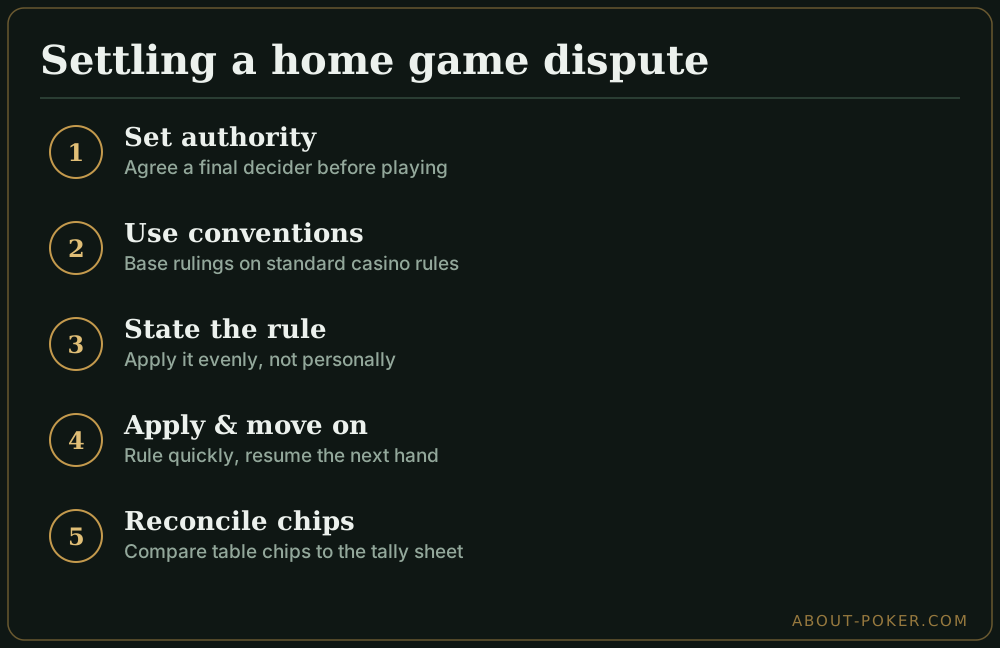
The most important move happens before the first hand: agree who makes the final call and that their word is final for the night. Usually that is the host, but it can be a rotating or neutral player. Just as important, agree that rulings follow standard casino conventions wherever possible, so a decision feels like “that’s the rule” rather than “my friend is picking on me.” When both the authority and the rulebook are settled in advance, a dispute becomes a ten-second lookup instead of a twenty-minute argument. Building your game on the conventions in our poker etiquette rules guide gives you that neutral rulebook.
Betting disputes: string bets and acting out of turn
The most frequent live disputes are about betting mechanics:
- String bets: A player puts chips forward, then reaches back for more without declaring the total. The standard ruling is that the bet stands at the first forward motion (or the verbally declared amount). Enforce this from hand one, because it prevents angle-shooting where someone bets small to gauge a reaction, then adds chips.
- Acting out of turn: If a player checks or bets before it is their turn, the action is typically taken as binding if the situation is unchanged when it reaches them, and void if the action before them changed. Announcing the action clearly, as covered in dealing at a home game, prevents most of these.
- Verbal declarations are binding: “Raise” or “all in” said clearly is committing, even before chips move. This protects everyone and speeds the game.
Misdeals and exposed cards
Misdeals cause disputes because people disagree on whether to void the hand. The line is simple once agreed: if a misdeal (wrong card count, a card exposed during the deal, dealing out of order) is caught before meaningful action, void the hand and redeal. Once real betting has happened, the hand stands and only the specific problem — such as a single exposed community card — is corrected with the burn-and-replace procedure. Post this rule so nobody relitigates it mid-hand. The mechanics live in our dealing at a home game guide.
Showdown disputes: cards speak
At showdown, adopt the “cards speak” principle: the best five-card hand wins regardless of what the player announces it as. If someone misreads their own hand as a straight when they actually have a flush, the flush still wins if the cards are tabled. This removes arguments about verbal misstatements. Require players to table both hole cards face up at showdown rather than mucking, and read the board out loud together. When two hands tie, split the pot evenly and give any odd chip to the player in the earliest position (left of the button) by convention.
The end-of-night chip discrepancy
The classic home-game nightmare is racking up at 1 a.m. and finding the chips do not match the cash. The cure is prevention: a single banker and a written tally sheet of every buy-in and rebuy, set up per the home game hosting checklist. When you close, total the chips on the table and compare to total cash bought in. If chips exceed cash, someone got chips without paying or a stack was over-counted; if cash exceeds chips, a redemption was missed or someone pocketed chips. With a tally sheet you can usually find the gap in a minute; without one, you are stuck splitting a shortfall among friends, which is exactly how games end.
A worked example
Two players go to showdown in a $180 pot. Player A turns over what he calls “a full house” but actually holds two pair. Player B, assuming he lost, starts to muck her hand face down toward the dealer — but the cards have not yet touched the muck and are still identifiable as a flush. Under cards-speak, the flush beats two pair, so the correct ruling is that Player B wins, provided her cards are retrievable and clearly hers. Now the wrinkle: if Player B had fully released her cards into the muck and they were irretrievable, the pot would go to Player A by default, because a hand that cannot be identified is dead. The lesson you announce afterward: always table both cards face up at showdown and never release them until the pot is awarded. One clear ruling, delivered calmly with the reason, keeps both players comfortable.
Keep it about the rules, not the person
The tone of a ruling matters as much as its content. State the rule, apply it evenly, and move on to the next hand quickly — do not let a table debate simmer. If a genuinely novel situation arises that no rule covers, make a fair call, note it, and add it to your house rules for next time. Fair, fast, and consistent is what keeps friends at your table year after year.
Frequently asked
What is a string bet and is it allowed?
A string bet is reaching back to your stack for more chips after already placing chips forward, without declaring the full amount first. Standard rules disallow it: your bet is limited to the first motion or the amount you verbally declared. Enforce it consistently so nobody can angle for a read by faking a small bet then adding more.
How do you settle a chip discrepancy at the end of the night?
Compare the total chips on the table to the total cash bought in, using the banker's tally sheet. If chips exceed the cash, someone bought in without paying or a stack was miscounted; if cash exceeds chips, someone left with chips or a redemption was missed. A written tally prevents almost all of these.
Who makes the final ruling in a home game dispute?
Agree in advance on a decision-maker, usually the host, and that their ruling is final for the night. Base rulings on standard casino conventions where possible so they feel neutral rather than personal. A pre-agreed authority and a written rule set turn heated arguments into quick decisions.