Home Game Hosting Checklist
A complete home game hosting checklist: chips, table, banking, blind structure, house rules, food, and safety so your poker night runs smoothly.
On this page · 7 sections
A great home game feels effortless to the players and is anything but for the host. The difference between a night everyone wants to repeat and a chaotic one that ends in an argument comes down to preparation: the right gear, clear money rules agreed before a single card is dealt, and a plan for the boring logistics. This checklist walks through everything to sort before your guests arrive.
The gear you actually need
Start with the physical setup. You do not need a casino table, but you do need enough of the basics:
- A chip set — a 500-chip set covers up to nine players comfortably, with spares for rebuys.
- Two decks of cards per table so one is shuffled while the other is dealt; plastic or plastic-coated cards last far longer than paper.
- A dealer button and, ideally, small and big blind markers.
- A table big enough for elbows and a felt or mat if you want cards to slide and chips to sit flat.
- A cut card to protect the bottom of the deck during the deal.
If you are dealing yourselves rather than hiring a dealer, brush up with our guide to dealing at a home game so the mechanics stay clean and fair.
Sort the money before anyone sits
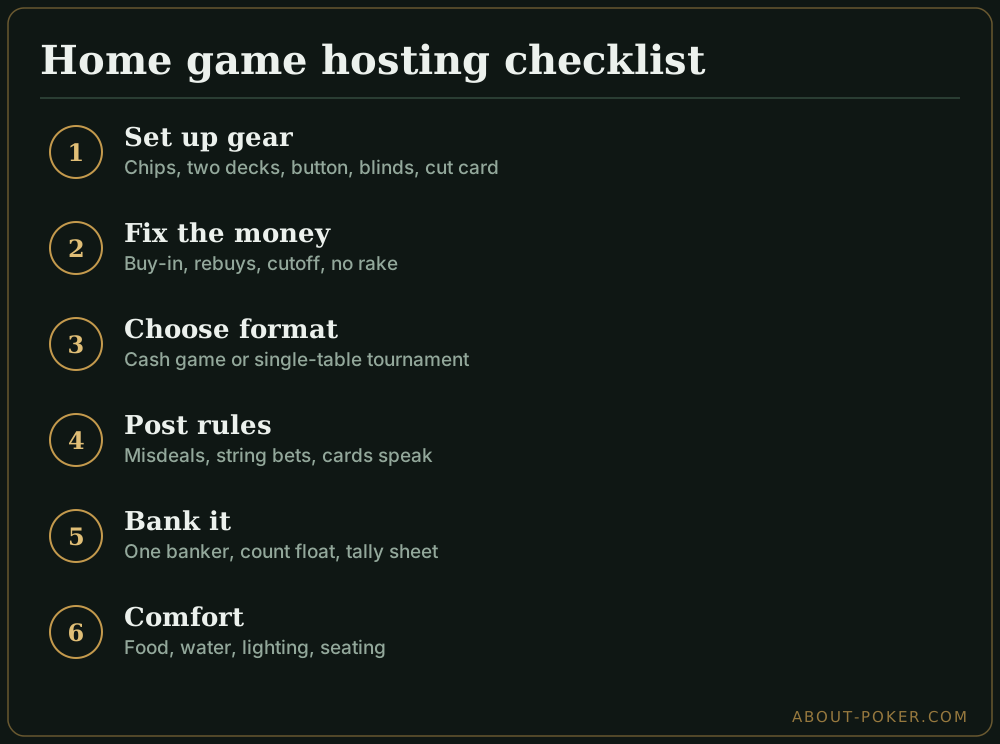
Money is where friendships get tested, so make every rule explicit in advance. Decide and announce: the buy-in amount, whether rebuys are unlimited and until when, and how cash-outs work at the end. Appoint a single banker who handles all chip sales and redemptions, and keep a written tally of who bought in for how much. The classic home-game disaster is the “chip discrepancy” at the end of the night, where the total chips on the table do not match the cash in the box. Prevent it by having one person control the bank and by counting the starting float before play begins.
Most friendly games take no rake — every dollar in comes back out — which keeps the vibe warm. If you want to cover pizza, collect a small flat fee per head separately rather than skimming pots, and be mindful that hosting a raked game for profit is illegal in many places.
Choose a structure and stakes
Pick a format that fits your crowd. Cash games are flexible — players come and go, rebuy freely, and stacks are real money on the table — which suits a casual social night. A single-table tournament with a rising blind structure creates a defined start and finish and a clear winner, which some groups prefer. For a tournament, plan a blind schedule with a comfortable level length (15 to 20 minutes for a fun night) so it ends at a reasonable hour rather than dragging past midnight. Match the stakes to the least wealthy regular, not the most — a game people can afford to lose in is a game they come back to.
Write down the house rules
Ambiguity causes arguments, so settle the common edge cases before you deal. Post or announce your rulings on: string bets and verbal declarations being binding, what happens to a misdeal, whether a card shown to one player is shown to all, minimum raise sizes, and the “cards speak” principle at showdown. Basing your house rules on standard casino conventions — see our overview of poker etiquette rules — means new guests already know most of them. Having a plan also makes handling disputes at home games far easier, because you can point to a rule rather than arguing on the spot.
Comfort, food, and flow
The social layer keeps people coming back. Set out simple food that survives a long night — pizza, wings, chips, and plenty of water alongside any alcohol. Keep drinks away from the felt to avoid a soaked deck. Good lighting over the table and comfortable chairs matter more than any fancy accessory. Have a clear start time and a soft end time so guests can plan, and consider a music playlist low enough that table talk still carries.
A worked example
Say you are hosting eight friends for a $40 buy-in cash game with unlimited rebuys until 11 p.m. You lay out a 500-chip set, giving each player a starting stack of 50 chips: twenty $1 (white), twenty $2 (red as $2 for simplicity — or use $5s), and a few larger denominations, so a $40 buy-in is easy to make and change. You appoint your friend Sam as banker, count the float, and write “8 players in for $40 = $320 on the table” at the top of a notepad. Blinds are set at $0.25/$0.50. When someone rebuys, Sam logs it. At 11 p.m. you count the chips: if they total $520 after five rebuys of $40, the math checks out and everyone cashes their stack at face value. That single tally sheet is what turns a potential end-of-night dispute into a two-minute reconciliation.
Final pre-game checklist
- Chips counted and starting stacks pre-made
- Two decks, button, blinds markers, cut card ready
- Buy-in, rebuy, and cutoff rules announced
- Single banker chosen and float counted
- House rules agreed on misdeals, string bets, and showdown
- Food, water, seating, and lighting sorted
- Start and soft-end times communicated
Nail these and your only job during the game is to enjoy playing it.
Frequently asked
How many poker chips do I need for a home game?
For up to nine players, a 500-chip set is comfortable, with roughly 300 to 400 in play and the rest as backup for rebuys. Give each player a starting stack of about 50 chips across three or four denominations so they can make change and bet flexibly without constant coloring up.
How much money should players bring to a home game?
Set a clear buy-in and rebuy amount in advance and tell everyone to bring cash in small bills. A common casual structure is a fixed buy-in with unlimited rebuys until a cutoff time, so nobody is stuck without chips and change is easy to make at the table.
Should a home game take rake?
Most friendly home games take no rake at all — every dollar bought in is paid back out, which keeps friends happy. If you want to cover snacks, collect a small flat fee per player separate from the pot rather than raking hands, and never profit from hosting where it may be illegal.