How to Handle Chips at the Table
Master live poker chip handling — stacking, betting cleanly, avoiding string bets, and reading stacks — so you look like a regular and never give away tells.
On this page · 6 sections
Handling chips smoothly is the single fastest way to stop looking like a beginner at a live table. It is not about flashy riffling — it is about betting cleanly, keeping your stack legible, and not leaking information every time you touch your chips. This guide covers the mechanics that matter and the habits that quietly give away your hand.
Stack them so everyone can count
House rules almost everywhere require your chips to be visible and countable. That means:
- Stack in even piles, usually 20 chips high, grouped by denomination.
- Keep your biggest chips in front or on top, not buried behind stacks of $1 chips.
- Never cover your chips with your hands, cards, phone, or a drink.
There is a practical reason beyond etiquette. Opponents are allowed to ask the dealer for a rough count of your stack, and you want a fast, accurate answer. Hiding chips (“ratholing” or obscuring) can draw a warning from the floor and looks like you are trying to hustle.
Bet in one clean motion
The cardinal sin of chip handling is the string bet. A string bet is when you push some chips forward, then reach back to your stack for more without having announced the amount. The dealer will rule that only your first motion counts.
There are two safe ways to bet:
- Announce first. Say “raise to forty” out loud, then take your time assembling the chips. Verbal declarations are binding and protect you completely.
- One motion. Move all the chips you intend to bet forward together in a single push.
Announcing is the pro habit. It removes any ambiguity, prevents string-bet rulings, and even hides physical tells because your hands are no longer doing the talking.
Worked example: the accidental string bet
You are facing a $10 bet and want to raise to $30. You grab a stack of $5 chips, count out $20, and slide them forward. Realizing $20 is only a call plus $10, you reach back for two more $5 chips. Too late — the dealer says “that’s a call.” Your reach-back was a second motion with no prior announcement, so the raise is void and you are stuck calling with a hand you wanted to raise. Had you simply said “make it thirty” before touching a single chip, the raise would stand no matter how long you took to build it.
Cutting and counting chips
To move chips efficiently, learn to cut them — slide a portion off a stack and count in groups of five. To count an opponent’s bet, watch the dealer or ask “how much is that?” You are always entitled to a count of the current bet and, before you act, a rough count of another player’s total stack. Do not guess and act; get the number.
Beware that the way you handle chips can itself become a tell. Fumbling, over-shuffling, or a sudden change in tempo when you have a big hand are all things observant opponents pick up. Read more in our guide to chip handling tells.
Protecting your hand and your chips
A couple of physical habits keep you out of trouble:
- Protect your cards with a chip or card protector placed on top. An unprotected hand that the dealer accidentally mucks is dead — the floor will not rule in your favor.
- Keep bets in front of you, not in the pot. Push your bet forward but leave it in your betting area until the action is complete, so the dealer can verify amounts. The dealer pulls chips into the pot.
- Do not splash the pot. Throwing chips directly into the middle makes them impossible to count and is a beginner giveaway.
These mechanics are part of the standard flow of a hand; see live poker rules and, if this is all new, the broader first-time live poker guide.
A clean-handling checklist
Run through this until it is automatic:
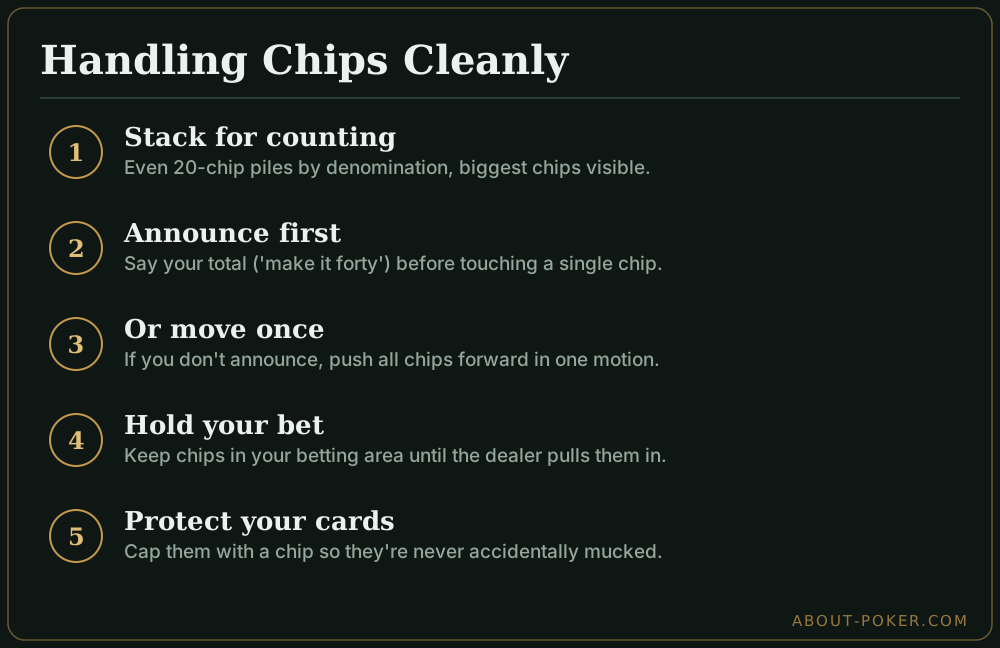
- Stack in even 20-chip piles, big chips visible.
- Announce your action before touching chips whenever raising.
- If you do not announce, move all chips forward in one motion.
- Keep your bet in your betting area until the dealer pulls it.
- Protect your cards with a chip or protector.
- Never cover, hide, or remove chips from the table mid-session.
None of this is difficult, but doing it consistently marks you as a serious player — and denies observant opponents the free reads that sloppy chip handling hands out.
Frequently asked
How should I stack my poker chips?
Stack chips in even piles of 20 by denomination, with your highest-value chips visible and not hidden behind smaller ones. This makes your stack easy to count for you, opponents, and the dealer, and is required by most house rules.
What is a string bet and how do I avoid one?
A string bet is going back to your stack for more chips after your first forward motion without announcing the amount. Avoid it by announcing your bet size verbally first, or by moving all your chips forward in one single clean motion.
Do I have to keep my chips visible?
Yes. House rules require your full stack to be visible and countable at all times. You cannot hide high-value chips behind lower ones or cover chips with your hands, cards, or objects. Keeping chips visible also prevents accidental ratholing accusations.