How to Bluff a Scare Card
How to bluff a scare card in Texas Hold'em: what makes a card scary, when your range credibly reps the nuts, sizing, and a full worked bluff example.
On this page · 6 sections
Bluffing a scare card is one of the most reliable ways to win a pot without the best hand. A scare card is a community card that completes a threatening draw or brings a big overcard, and when it lands, it lets you tell a believable story that you just made a monster. Done right, it folds out hands that were beating you. Done carelessly, it burns chips against opponents who were never folding. The difference is understanding when the story is credible.
What Makes a Card “Scary”
A scare card is any card that dramatically increases the number of strong hands possible on the board. The classic examples are a third card of a suit that completes a flush, a card that fills in an obvious straight (like a jack landing on a 9-T-Q board), and a high overcard — especially an ace — arriving on a previously low board. Each of these cards lets a big hand exist that did not exist a moment ago.
The point of bluffing one is leverage. When the scary card appears, your opponent’s medium-strength hands — top pair, an overpair — suddenly look a lot weaker, because now they can plausibly be beaten. Your job is to represent that you are the one who got there. This is closely tied to reading the board: you can only bluff a scare card you have actually recognized.
Your Range Must Credibly Contain the Nuts
Here is the rule that separates winning scare-card bluffs from spew: you must be able to credibly hold the hand the scare card completes. Your betting line up to that point has to be consistent with a hand that would have made the flush or straight.
If you raised preflop and continuation bet the flop with a flush draw in your range, then a third flush card on the turn is a card you can genuinely represent — your opponent knows flush draws were part of how you played. But if your line never contained any flush draws, betting big when the flush completes fools no observant player. The scare card must fit your story. When it does, your opponent faces a real dilemma; when it does not, you are bluffing into a call.
Sizing and Timing the Bluff
A scare-card bluff usually wants a larger size, because you are representing a strong hand and you want to make continuing genuinely painful. Betting two-thirds to full pot, or overbetting on the river, applies maximum pressure and matches the sizing you would use with the actual nuts. A tiny bet undercuts your own story — nobody bets one-quarter pot with a freshly made flush they want paid.
Timing matters too. The turn is often the best street to fire a scare-card bluff, because your opponent still has the river to worry about; a turn bet threatens a bigger river bet to come, compounding the pressure. Betting the scare card on the flop as a continuation bet that then barrels the turn is a common, credible two-street line.
A Worked Example
You raise preflop with As Qs and get one caller in the big blind. The flop is Kh 7s 4s. You have the nut flush draw plus two overcards. You continuation bet; the opponent calls. So far your line is textbook, and crucially, flush draws are firmly in your range.
The turn is the 2s — a third spade. The flush has completed. From your opponent’s seat, you raised preflop, bet the flop, and now bet again the moment the flush card arrived. That is exactly what a made flush looks like. You bet three-quarters pot. Their king-pair hand is now in serious trouble: you could easily hold the flush you have been representing all along, and even you actually do have the nut flush draw, so a river spade makes it real. Facing that pressure, most one-pair hands fold. If they call the turn, the river brings the threat of another big bet, and you can barrel again on a credible card. The bluff works because every action told the same consistent story.
Common Mistakes
The biggest error is bluffing scare cards against players who do not fold — calling stations do not care about your story, so save the bluff for thinking opponents. Second, bluffing a scare card your line cannot represent (firing at a flush when you clearly never had spades) is transparent. Third, sizing too small signals weakness and invites calls. Fourth, bluffing into multiple opponents multiplies the chance someone actually holds the hand you are repping — scare-card bluffs are far stronger heads-up. Finally, do not bluff every scare card automatically; balance them with real value hands so you are not exploitable.
A Scare-Card Bluff Checklist
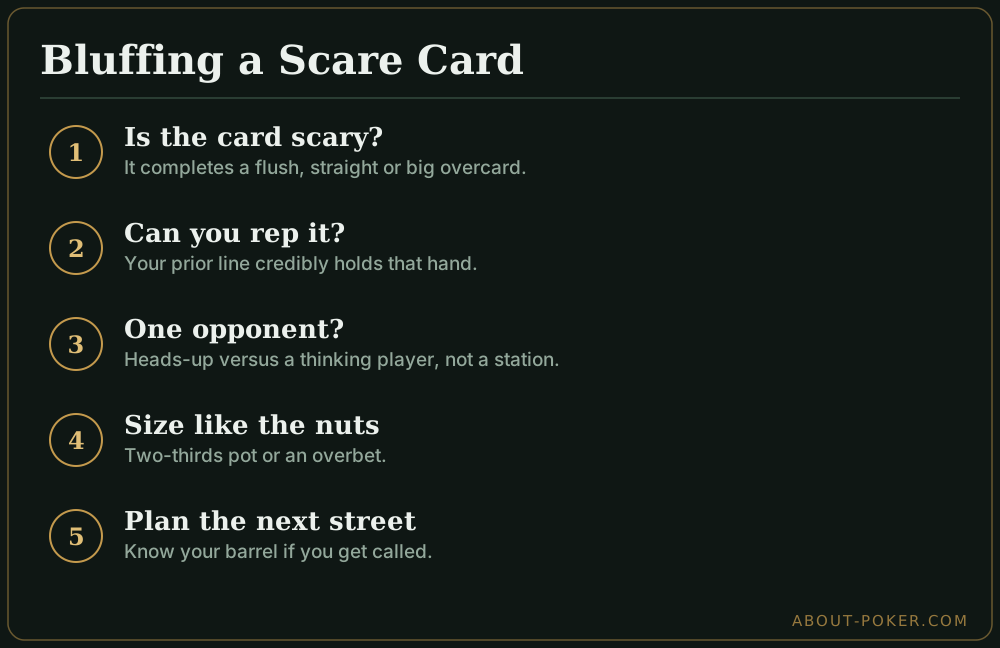
Before you fire, confirm:
- The card genuinely completes a threatening flush, straight, or brings a scary overcard.
- Your prior line credibly includes the hand it completes.
- You are up against one thinking opponent, not a station or a crowd.
- Your sizing matches what you would bet with the real nuts.
- You have a plan for the next street if you get called.
When all five line up, bluffing a scare card is high-percentage poker: you apply pressure exactly when your opponent is most vulnerable, backed by a story they cannot dismiss. Recognize the card, tell the truth of your range, size it like you mean it, and take the pot.
Frequently asked
What is a scare card?
A scare card is a community card that completes an obvious draw or brings an overcard, making strong hands possible. A third flush card, a card that finishes a straight, or an ace on a low board are classic scare cards that let you credibly represent a big hand.
Why do scare cards make good bluffs?
A scare card lets your betting range include the nuts, so your opponent cannot be sure you are bluffing. When the flush completes and you bet, they must respect that you could hold the flush, which folds out their one-pair hands.
Do I need the scare card in my range to bluff it?
Yes, that is the key. The bluff only works if you could credibly have the hand the scare card completes. If your preflop and flop line never contained flush draws, betting the flush card fools no thinking opponent.