Free Poker Study Tools: What's Worth Using
A serious poker study routine costs nothing to start. Here are the free tool categories that matter and how to combine them into a habit.
On this page · 4 sections
The best free poker study tools are a free equity calculator, free training content, a community forum for hand feedback, and a plain spreadsheet. That short list covers every fundamental an improving player needs. Paid software adds depth and automation later, but nothing on it is a secret edge you can only buy.
The mistake people make is hunting for one magic free tool. There isn’t one. Value comes from wiring a few categories together so they form a loop you’ll actually repeat. In practice that means something like Equilab for equity, YouTube plus the Two Plus Two forums for learning and feedback, and a Google Sheet for tracking — the named picks below fill in each slot.
The four categories that matter
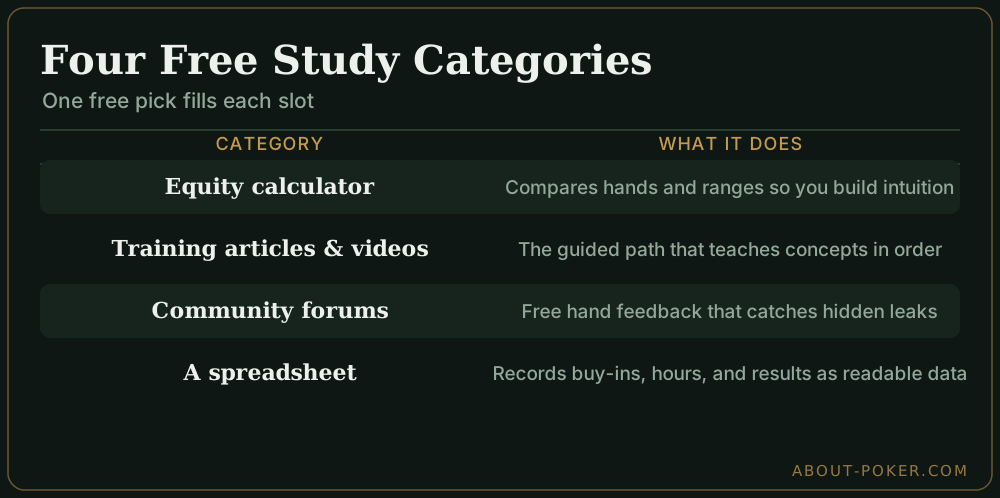
Think in categories rather than brand names, because the free option in each is usually good enough to learn from.
- Equity calculator — compares hands and ranges so you build intuition for who’s ahead in a spot.
- Training articles and videos — the guided path that teaches concepts in a sensible order.
- Community forums — free hand feedback from other players, which catches leaks you can’t see in your own play.
- A spreadsheet — records buy-ins, hours, and results, turning scattered sessions into data you can read.
Together they close a full learning cycle: you learn a concept, test who’s ahead with the equity calculator, get feedback on the hard spots, and log how it went in a tracking spreadsheet.
The specific free tools worth starting with
Categories are the right way to think, but you still have to open something. These are well-known, genuinely free (or free-tier) picks in each category. None require your poker-account password, and none are ranked as “the one best” — the right choice depends on where you play.
| Tool | Category | What it does free | The catch |
|---|---|---|---|
| Equilab | Equity calculator | Full hand-vs-range and range-vs-range equity, plus hand-group breakdowns | Windows-only desktop app; Hold’em focused (Omaha has a separate Equilab build) |
| PokerStove | Equity calculator | Classic all-in equity between hands and ranges | Discontinued and no longer updated, but still runs; basic UI |
| Two Plus Two forums | Forum feedback | Strategy sub-forums where you post hands and get replies for free | Slower pace than it once had; quality varies by stakes forum |
| r/poker (Reddit) | Forum feedback | Fast, casual hand-review threads and a large audience | Feedback skews recreational; verify advice against a solver or trusted source |
| YouTube (e.g. Jonathan Little, Doug Polk) | Training content | Free full-length strategy videos and hand breakdowns | Unstructured — you have to sequence your own learning path |
| Google Sheets / Excel | Tracking | Log buy-ins, hours, and results; build your own graphs | Manual entry; no automatic hand import or HUD |
A note on trackers specifically: the big-name trackers (PokerTracker 4, Hold’em Manager 3) are paid, and the “free” versions are time-limited trials. If you play on a site with a built-in tracker — GGPoker’s PokerCraft and partypoker’s SmartHUD are the common ones — that’s the closest thing to a free, no-setup tracker. Otherwise a spreadsheet is the honest free option until volume forces an upgrade.
A weekly loop using only free tools
- Pick one concept — say, defending the big blind — and read or watch free training content until it clicks.
- Run the exact matchups from that concept through a free equity calculator so the numbers stick.
- Post one tricky hand to a forum for peer feedback.
- Log the week’s sessions in your spreadsheet.
- Skim the log, find the leak that cost you most, and make it next week’s concept.
Repeat that and you’ll improve faster than someone who bought expensive software and studies at random.
When free stops being enough
Free tools rarely hold anyone back at the beginner or intermediate level. You’ll know it’s time to spend when a specific wall appears: manual logging becomes painful at higher volume, free solver lookups keep hitting their limits, or you want structured advanced courses that free content doesn’t sequence. Until then, the free stack is genuinely more than enough — and one guard rail applies no matter what you add. Be skeptical of any “free” tool that wants your poker account password or promises guaranteed profit; legitimate tools work from your own hand history and public data, never your login. Browse the wider poker tools and software toolkit when you actually hit that wall.