What Is Fold To Steal in Poker?
Fold to steal measures how often a player gives up their blind to a late-position raise. Learn what the stat means and how to attack over-folders profitably.
On this page · 6 sections
Fold to steal is the HUD stat that tells you how often a player in the blinds surrenders their forced bet when a late-position player raises to steal. It is the direct counterpart to attempt to steal: one measures how often someone tries to take the blinds, the other measures how often the blinds let them. If you know an opponent folds to steals too often, you have found one of the most reliable profit sources in poker, because you can raise a wide range and win the pot before the flop over and over.
What the stat measures
Fold to steal is calculated as the number of times a player folded a blind to a late-position open, divided by the number of times they faced a steal attempt, times 100. The steal positions are the cutoff, button, and small blind, so a big blind facing a button raise that folds is a “fold to steal.” Calling or 3-betting is a defense and does not count as a fold.
Most trackers separate the number for the small blind and the big blind, and that split is worth reading. The big blind gets a discount because one big blind is already invested and it closes the action, so a healthy big-blind fold-to-steal is lower than the small-blind figure. This stat sits in the same family covered by our advanced HUD stats: steal and postflop guide.
What a good fold to steal number looks like
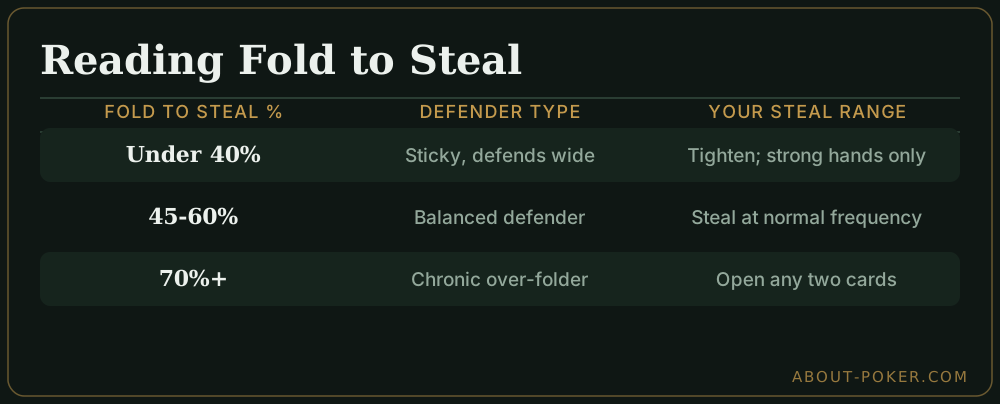
- Under 40 percent: a sticky defender. They call and 3-bet wide, so light steals get punished. Tighten your opening range against them.
- 45 to 60 percent: roughly balanced defense. Steal at normal frequencies.
- 70 percent and up: a chronic over-folder. Against them, raising any two cards from the button is profitable, because your open wins immediately far more often than the pot odds on the steal require.
A worked example
You raise to 2.5 big blinds from the button. The pot before your raise is 1.5 big blinds (the two blinds). For a pure steal to break even on immediate fold equity, you need the blinds to fold often enough that winning the 1.5 blinds covers the 2.5 you risk. Roughly, if the combined blinds fold about 62 percent of the time, your steal is already profitable before you ever see a flop, and any postflop equity is a bonus.
Now check the HUD. The big blind shows a 75 percent fold to steal over a solid sample. That is well above the break-even threshold, so you can open literally any two cards from the button against this player and expect a profit on the steal alone. When they do defend, you still have position. Compare that to a big blind showing 35 percent fold to steal: now most of your trash opens get called or raised, you are playing flops out of the drivers’ seat, and you should tighten to hands that flop well.
How position and sample size change the read
Read fold to steal per seat and per stealing position when you can. A player might fold their small blind 85 percent of the time but their big blind only 45 percent, which means small-blind steals crush while big-blind steals need a real hand. Sample size is critical: fold-to-steal frequencies bounce around wildly over small samples, so wait for a few hundred faced steals before you trust an extreme number. Our guide on how to read and use a poker HUD explains how to weight thin samples.
Common mistakes
The first mistake is stealing wide against a low fold-to-steal player because “the button is the button.” If they defend at 35 percent, your junk opens are lighting money on fire. The second is failing to check your own fold to steal: if regulars see you folding 80 percent of your big blind, they will raise every time and you bleed chips. The third is confusing fold to steal with the general fold to c-bet or 3-bet numbers, which describe entirely different decision points.
Quick checklist
- Confirm a real sample of faced steals before trusting the stat.
- Split by small blind and big blind; the SB usually folds more.
- Over 70 percent means over-folder; steal any two cards.
- Under 40 percent means sticky; tighten your opening range.
- Monitor your own fold to steal so you are not the mark.
Fold to steal turns the blind battle into arithmetic. Find the over-folders, widen your late-position opens against them, and let the immediate pot equity do the work.
Frequently asked
What is a good fold to steal percentage?
A well-defended player folds their blinds to a steal somewhere in the 45 to 60 percent range. Above roughly 70 percent means they over-fold and you can steal any two cards profitably. Below 40 percent means they defend very wide and light steals will get punished.
Why does fold to steal matter?
It tells you whether stealing the blinds against a specific player prints money. If they fold most of the time, your open wins the pot immediately far more often than it needs to, so raising almost any hand from late position shows an instant profit.
Is fold to steal separate from fold to 3-bet?
Yes. Fold to steal measures how often a player in the blinds folds to a late-position open. Fold to 3-bet measures how often a raiser folds when re-raised. They describe different moments in the hand and are read for different purposes.