Playing Under the Gun
Playing under the gun means acting first with eight players behind you. Learn the tight range, sizing, and post-flop discipline that make UTG profitable.
On this page · 6 sections
Under the gun (UTG) is the seat immediately left of the big blind — the very first player to act before the flop. Playing it well is mostly about restraint. You are opening into eight players who all get to act after you, and if you get called you will spend the rest of the hand out of position. The winning approach is a tight, strong range played with confidence, not a wide range played with hope.
Why under the gun is the hardest seat
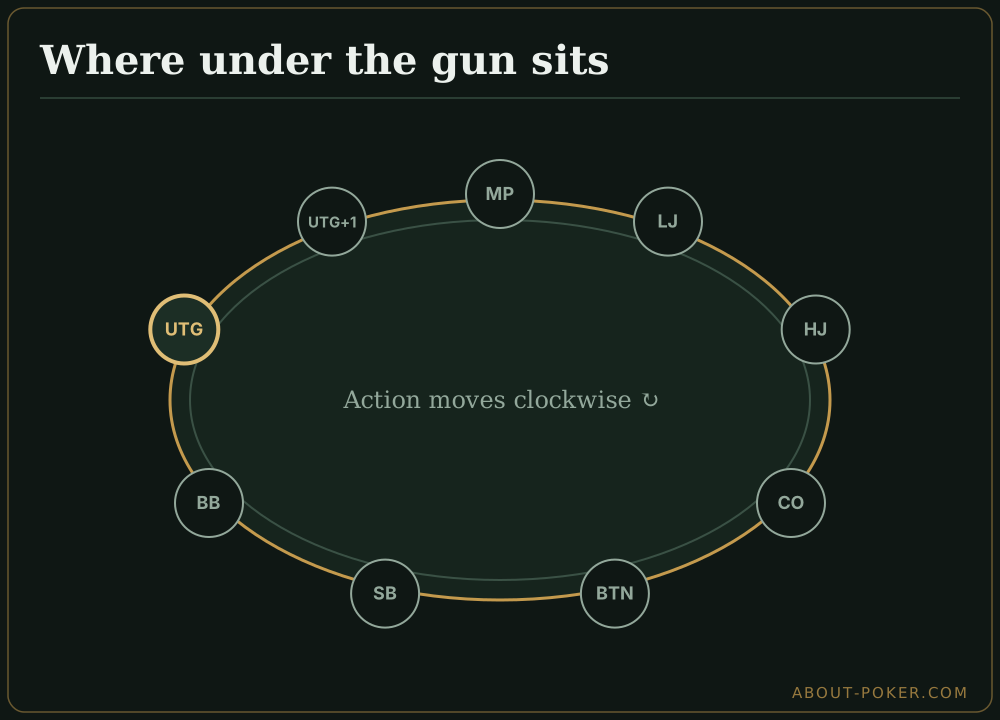
Position is information, and under the gun you have the least of it. Everyone behind you can 3-bet, cold-call, or trap, and you have to commit chips before knowing what any of them will do. On top of that, when you do get called you are almost always out of position for the flop, turn, and river — the player with the button acts after you on every street and controls the size of the pot.
That double disadvantage is exactly why position matters so much in poker. The compensation for playing first is that you only enter pots with hands strong enough to survive the disadvantage.
The right under the gun opening range
In a full-ring (nine-handed) game, a solid UTG opening range is roughly 10-12% of all hands:
- All pocket pairs from AA down to about 66
- AK, AQ, AJ suited and offsuit (drop AJo in tougher games)
- KQ suited and offsuit, KJ suited
- The strongest suited aces: A5s-A2s can be added as occasional bluffs
In 6-max games you face fewer players, so you can widen to about 15-16% — adding hands like ATs, KTs, QJs, and small pairs down to 22. The principle is the same: every hand you open should be one you’re happy to play against a 3-bet.
A worked example
You’re UTG in a nine-handed cash game, 100 big blinds deep, holding Ah-Ks. You open to 3 big blinds. The cutoff 3-bets to 10. This is a clear continue — AK plays well against a 3-betting range and has strong equity even when called. Compare that to opening A9o from the same seat: if the cutoff 3-bets, you’re forced to fold a hand you never should have opened, bleeding chips one small raise at a time. That single filter — “can this hand face a 3-bet?” — is what separates a disciplined UTG range from a leaky one.
For reference on raw strength, aces are about an 82% favorite against kings all-in preflop, and even AK is only a coinflip (roughly 46%) against a pair like 66. Being first to act means you want hands that hold up across many different post-flop textures, not marginal hands that need to hit perfectly.
Common mistakes under the gun
- Limping in. Open-raising is almost always better. Limping caps your range and invites multiway pots where your out-of-position disadvantage is magnified.
- Opening too many suited hands. Suited connectors and small suited aces look pretty, but out of position with the whole table behind you they realize far less equity than they do on the button.
- Sizing tells. Using a bigger raise with big hands and a smaller one with weaker opens is a leak good players will exploit. Keep one consistent size.
- Overcommitting to marginal made hands. Top pair with a weak kicker out of position is a pot-control situation, not a stack-off.
How it changes with stack depth and opponents
Against tight, passive tables you can open slightly wider because you’ll win more pots uncontested. Against aggressive 3-bettors, tighten up — you don’t want to open hands you’ll be forced to fold to pressure. As stacks get shorter in tournaments, the min-raise-fold approach gives way to a push/fold framework: with 12-15 big blinds you’re often jamming your entire continuing range rather than making a small raise.
If the table is full of loose callers, resist the urge to “punish” them with wider opens from UTG. The extra players behind still hurt you; the better adjustment is to keep opening tight and value-bet relentlessly when you flop well.
A quick UTG checklist
Before you open under the gun, run through this:
- Is this hand in my top ~12% (full ring) or ~16% (6-max)?
- Am I comfortable continuing if someone 3-bets?
- Am I using my standard raise size?
- Do I have a plan for playing this out of position after the flop?
If the answer to any of those is no, folding is the profitable choice. Under the gun rewards patience: fold the junk, raise your premiums, and let your opening range by position do the heavy lifting. The pots you don’t play from this seat are just as important as the ones you win.
Frequently asked
What hands should you play under the gun?
In a nine-handed game, open only your strongest 10-12% of hands: pairs down to about 66, AK through AJ suited, KQ, and the best suited aces. In 6-max you can add a few more suited broadways and small pairs because fewer players act behind you.
Should you ever limp under the gun?
In most modern games no — open-raising is stronger because it takes the pot down more often and builds a pot with your good hands in position on later streets. Limping invites the whole table in and leaves you out of position with a capped range.
How big should you raise from under the gun?
A standard open is 2.2-3 big blinds online and 3-4 big blinds live where fields call wider. The exact size matters less than being consistent so observant opponents can't read your hand from your sizing.
Is under the gun the same in tournaments and cash?
The seat is identical, but as tournament stacks shorten you shove or fold rather than min-raise-fold. In deep cash games you keep the range tight because you'll play many post-flop streets out of position.